10 Common Misconceptions About Fertility Explained

10 Common Misconceptions About Fertility Explained

Fertility is a complex topic that touches both men and women, yet it is often misunderstood. Misconceptions about fertility are widespread, influenced by myths, social media, anecdotal stories, and outdated medical information. 

These misunderstandings can lead to unnecessary stress, poor decision-making, and delays in seeking professional help.

Understanding the facts about fertility can empower individuals and couples to make informed choices about family planning. In this article, we will explore 10 common misconceptions about fertility, providing evidence-based insights and practical advice to help you navigate your reproductive health.

Table of Contents

Why Fertility Misconceptions Are Common

Fertility involves a combination of biological, hormonal, and lifestyle factors, which makes it difficult to fully understand without professional guidance. Some of the reasons fertility myths persist include:

Age

Outdated Information

Many fertility beliefs come from outdated research or personal stories, not the latest medical science, causing widespread myths.

Lifestyle Choices

Social Pressures

Private discussions and social stigma around fertility allow misinformation to spread easily through informal networks.

Media Influence

TV, movies, and social media often oversimplify fertility or show rare cases as typical, creating misleading impressions.

Complex Topic

Fertility is complex, influenced by ovulation cycles, sperm quality, hormones, and age, making generalizations unreliable.

Misconception 1:

Fertility Declines Only After 40

Many people believe that women remain fully fertile until they reach their 40s, but fertility actually begins to decline in the late 20s to early 30s.

  • Egg quality decreases with age: Women are born with a finite number of eggs, and both the quantity and quality decline over time.
  • Increased risk of complications: Fertility decline is associated with a higher risk of miscarriage and chromosomal abnormalities.
  • Male fertility also changes: Men experience a gradual decline in sperm quality, volume, and motility as they age, although it occurs later than in women.

Understanding that fertility does not remain constant throughout adulthood can help individuals plan earlier, seek fertility testing when needed, and explore options like egg or sperm freezing if family planning is delayed.
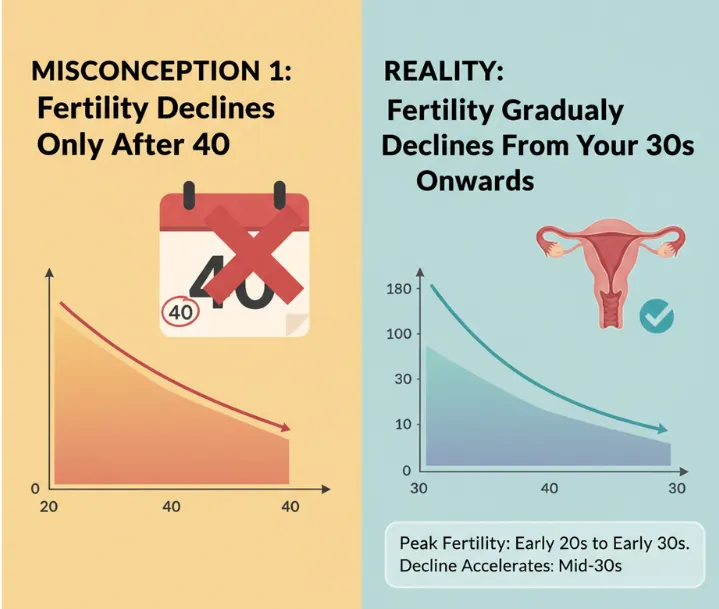
Misconception 1 Fertility Declines Only After 40
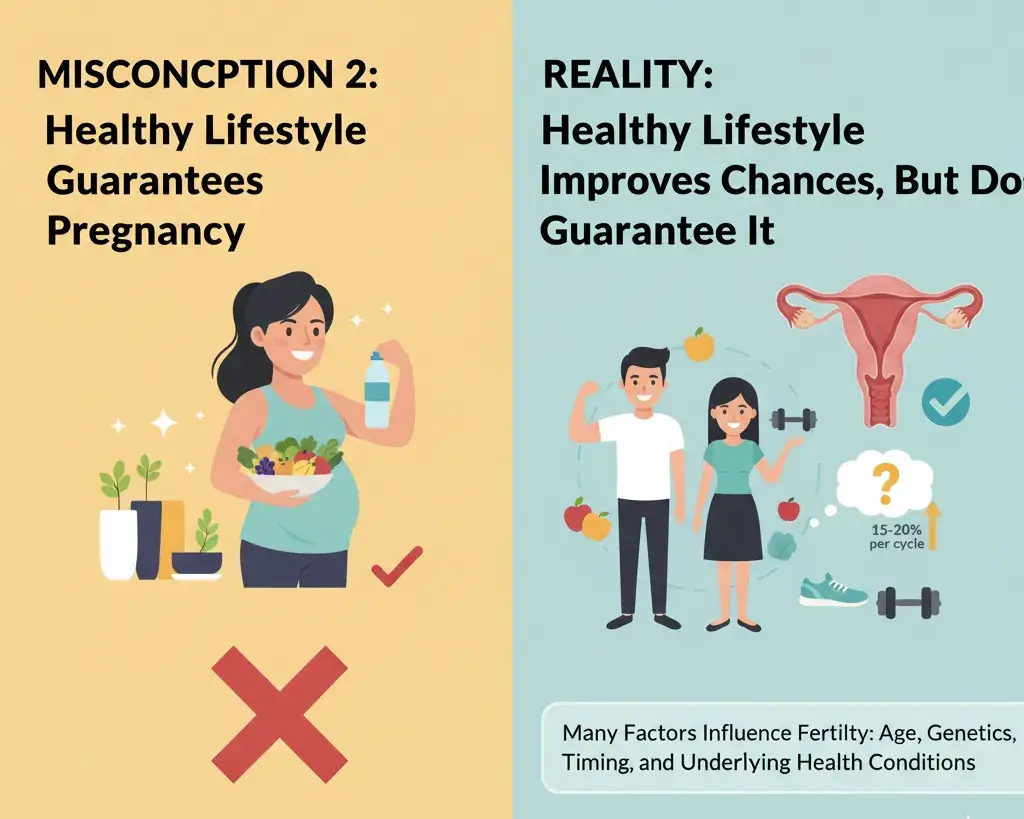
Misconception 2 Healthy Lifestyle Guarantees Pregnancy

Misconception 2:

Healthy Lifestyle Guarantees Pregnancy

A healthy lifestyle is important for fertility, but it does not guarantee conception. Nutrition, exercise, and avoiding smoking or excessive alcohol contribute to reproductive health, but other factors may interfere with fertility.

  • Medical conditions can impact fertility: Conditions like polycystic ovary syndrome (PCOS), endometriosis, or low sperm count can prevent conception despite a healthy lifestyle.
  • Genetic and structural issues: Uterine abnormalities, blocked fallopian tubes, or chromosomal issues may require medical intervention.
  • Lifestyle is one factor among many: While maintaining a healthy weight and reducing stress supports fertility, it is not a replacement for professional evaluation if conception is delayed.

Healthy habits can improve fertility outcomes but should be seen as supportive rather than a guarantee.

Misconception 3:

Fertility Problems Are Only a Woman’s Issue

Fertility is often considered a “woman’s issue,” but male fertility contributes to nearly half of all infertility cases.

  • Sperm quality matters: Low sperm count, poor motility, and abnormal morphology can reduce the chances of conception.
  • Environmental and lifestyle factors: Exposure to toxins, excessive heat, smoking, alcohol, obesity, and certain medications can affect male fertility.
  • Medical conditions: Conditions like varicocele, hormonal imbalances, or genetic disorders can impact male fertility.

Couples struggling to conceive should recognize that fertility evaluation should include both partners, not just women.

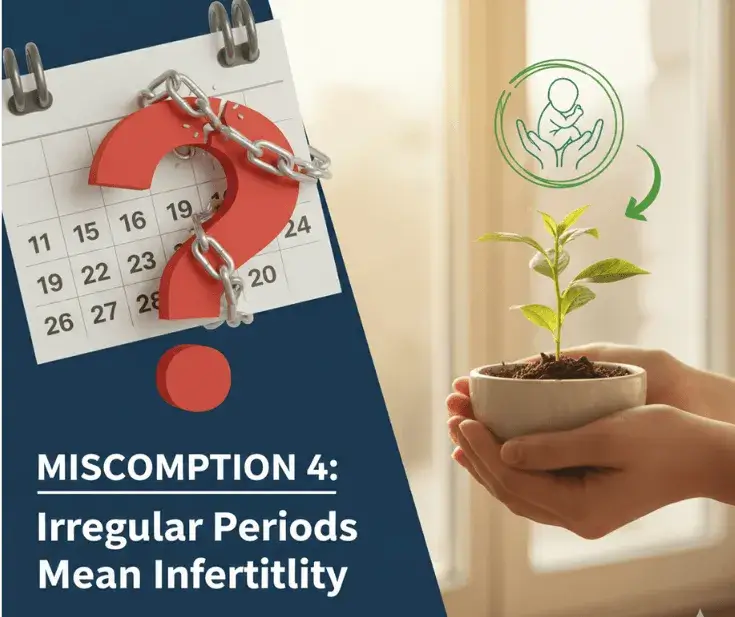
Misconception 4:

Irregular Periods Mean Infertility

While menstrual irregularities can indicate hormonal issues, irregular periods do not automatically mean infertility.

It is important to differentiate between irregular menstruation and complete infertility before drawing conclusions.

  • Ovulation may still occur: Some women with irregular cycles still ovulate and can conceive naturally.
  • Underlying conditions may be treatable: Irregular cycles caused by PCOS, thyroid disorders, or stress can often be managed with medical guidance.
  • Cycle tracking helps: Monitoring ovulation through basal body temperature, ovulation kits, or hormone tests can clarify fertility potential despite irregular periods.

Misconception 5:

Conception Happens Immediately

Many people expect pregnancy to occur as soon as they start trying, but conception often takes time. 

Understanding that conception can take several months helps reduce unnecessary anxiety and prevents premature assumptions of infertility.


  • Average time to conceive: For healthy couples under 35, around 80% conceive within a year of regular unprotected intercourse.
  • Timing is key: Conception is most likely during the fertile window, typically 5-6 days before and including ovulation.
  • Random variability: Age, reproductive health, and luck all influence how quickly pregnancy occurs.
Misconception 5 Conception Happens Immediately
Misconception 6 IVF Is a Guaranteed Solution

Misconception 6:

IVF Is a Guaranteed Solution

In vitro fertilization (IVF) is a powerful fertility treatment but it is not a guaranteed solution. 

IVF is a valuable tool for overcoming fertility challenges, but it should be seen as part of a broader treatment plan, not a guaranteed fix.

  • Success rates vary: IVF success depends on age, egg and sperm quality, reproductive history, and the specific fertility clinic’s expertise.
  • Multiple cycles may be required: Many couples need more than one IVF cycle to achieve pregnancy.
  • Costs and emotional strain: IVF can be expensive and emotionally challenging, making realistic expectations essential.

Misconception 7:

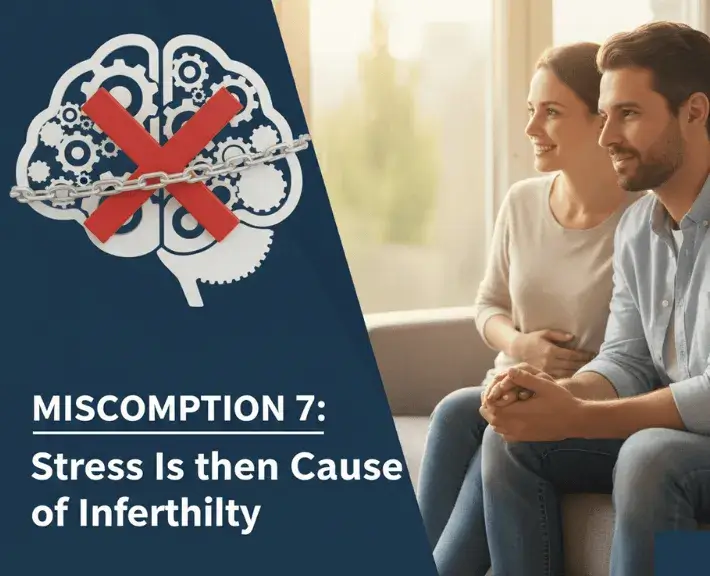
Stress Is the Main Cause of Infertility

Stress can affect hormone balance and menstrual cycles, but it is rarely the primary cause of infertility.

While stress management is beneficial, it should not be blamed as the main cause of fertility struggles.
  • Stress may reduce conception likelihood: Chronic stress can influence ovulation or sexual function, slightly lowering the chances of pregnancy.
  • Most infertility is medical: Structural problems, hormonal imbalances, sperm quality issues, and age-related factors are more common causes.
  • Support and counseling are helpful: Reducing stress through therapy, lifestyle changes, or support groups can improve well-being and fertility outcomes.
Misconception 8 Birth Control Pills Affect Long-Term Fertility

Misconception 8:

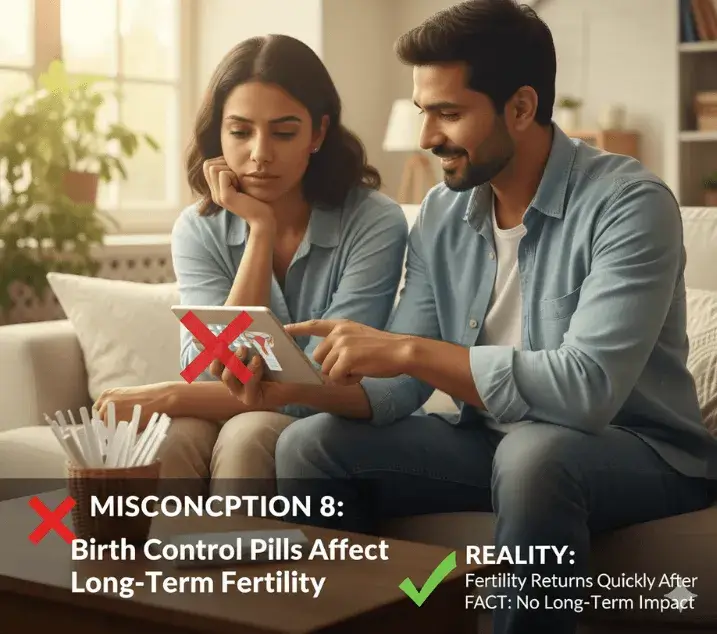
Birth Control Pills Affect Long-Term Fertility

Many people fear that using birth control pills for years will reduce fertility, but research shows this is largely unfounded.

Birth control is safe for long-term use and does not prevent future pregnancy once discontinued.

  • Fertility returns quickly: Most women ovulate normally within a few months after stopping hormonal contraception.
  • No permanent impact: Long-term pill use does not deplete eggs or cause lasting infertility.
  • Temporary cycle adjustment: Some women may experience irregular cycles initially after stopping the pill, but this is usually temporary.

Misconception 9:

Lifestyle Changes Can Reverse Infertility

While healthy habits improve fertility potential, they cannot always reverse infertility caused by medical conditions.

  • Treatable causes require medical care: Blocked fallopian tubes, severe sperm abnormalities, or uterine anomalies need professional treatment.
  • Lifestyle changes are supportive: Nutrition, exercise, and avoiding harmful habits improve general reproductive health and treatment outcomes.
  • Early intervention is critical: Waiting solely for lifestyle changes may delay diagnosis and reduce the chances of successful conception.


Fertility-friendly habits are important but should complement, not replace, medical evaluation and treatment.

Misconception 9 Lifestyle Changes Can Reverse Infertility

Misconception 10:

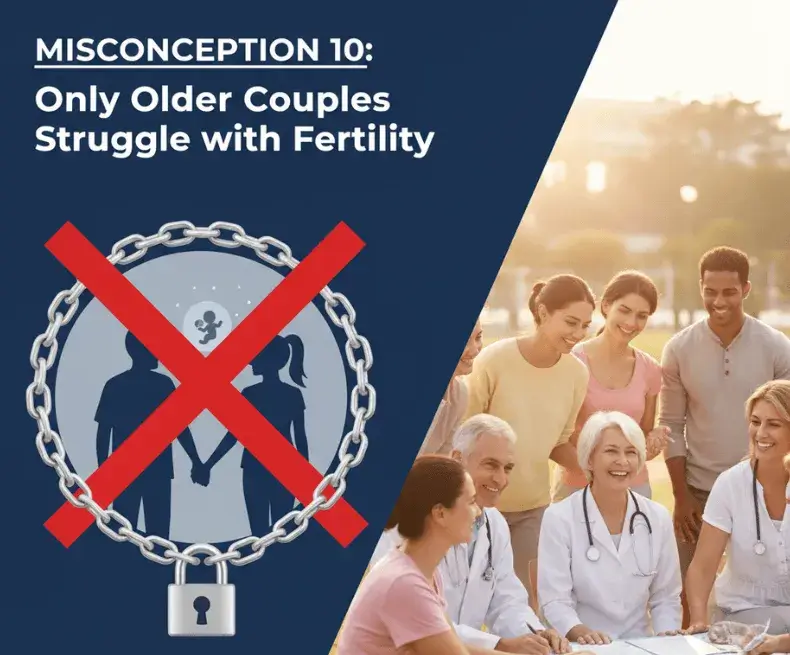
Only Older Couples Struggle with Fertility

Infertility can affect people at any age, not just those over 35. Recognizing that fertility challenges are not limited to older couples helps encourage timely medical consultation.

  • Young couples experience infertility: Factors like PCOS, endometriosis, genetic conditions, or male fertility issues can affect younger individuals.
  • Age is only one factor: While fertility declines with age, other medical or lifestyle issues are equally important.
  • Early assessment helps: Couples experiencing difficulty conceiving should seek evaluation regardless of age to identify treatable issues.

Conclusion

Fertility myths can create confusion, stress, and delays in seeking appropriate care. Understanding the truth behind common misconceptions empowers individuals and couples to make informed decisions about family planning.

Key takeaways include:

  • Fertility declines gradually, not suddenly, and affects both men and women.
  • Healthy habits support fertility but are not a guarantee of conception.
  • Medical evaluation is essential for persistent difficulties, regardless of age.
  • Assisted reproductive technologies, like IVF, are helpful but not infallible.

By separating fact from fiction, couples can approach fertility with realistic expectations, reduce stress, and improve their chances of achieving a healthy pregnancy.