
Age plays an important role in fertility, but many people are not fully aware of how early changes can begin. This often leads to worry when conception does not happen as expected, and many turn to a top rated fertility specialised clinic for clear answers.
It is common to feel confused about questions like egg quality, sperm health, or the “right age” to start trying for a baby. These concerns can create stress and uncertainty.
This guide will clearly explain how age affects fertility in both men and women. It will help you understand the changes, challenges, and options in a simple and easy way.
Fertility refers to the natural ability to conceive a child. It depends on the quality of reproductive cells (eggs in women and sperm in men), hormone balance, and the overall health of the reproductive system.
As the body ages, these systems gradually change. These changes are natural and expected, but they can influence:
While fertility does not disappear suddenly at a specific age, it does decline gradually, especially after certain life stages.


Female fertility is closely linked to the number and quality of eggs, which naturally decrease over time. Women are born with all the eggs they will ever have, and these eggs age along with the body.
A major reason for reduced fertility in women is the decline in ovarian reserve, which affects both the ability to conceive and maintain a healthy pregnancy.
Male fertility also changes with age, although more gradually compared to women.
Men continue to produce sperm throughout their lives, but sperm quality can decline over time, which may increase the need for supportive options such as men infertility treatment in some cases.
Key changes in male fertility:
While men can often conceive at older ages, advanced paternal age can still affect fertility outcomes and increase certain risks for the baby.

Fertility changes gradually with age in both men and women. The table below gives a simple overview of what typically happens at each stage.
| Age Group | Fertility Overview | Key Changes |
|---|---|---|
| 20s | Peak fertility for both sexes | High egg and sperm quality, highest chance of conception, low pregnancy risks |
| Early 30s | Still strong fertility | Slight drop in egg quality, sperm mostly stable with minor changes |
| Mid–Late 30s | Noticeable decline begins | Lower egg reserve, irregular cycles, reduced conception chances |
| 40s+ | Significant decline | Much lower natural conception, higher miscarriage risk, reduced sperm quality |
Conception depends on timing, reproductive health, and biological quality of eggs and sperm. Age impacts all of these factors.
For women:
For men:
Even with regular intercourse, age can reduce the likelihood of pregnancy each month.

As age increases, certain risks related to fertility and pregnancy also rise.
For women:
For men:
These risks do not mean pregnancy is impossible, but they highlight the importance of medical support and planning.
While age is a major factor, lifestyle also plays a powerful role in fertility health.
Key lifestyle influences:
Healthy lifestyle choices can help improve fertility outcomes, even when age-related changes are present.

For individuals who want to delay parenthood, fertility preservation can be an important option.
Common methods include:
These techniques allow reproductive cells to be preserved at a younger age, when quality is generally higher.
Fertility preservation is often considered by people focusing on career goals, medical treatments, or personal timing decisions.

Medical advances provide several options for individuals experiencing age-related fertility challenges.
Common treatments include:
A fertility specialist may recommend different treatments depending on age, hormone levels, and reproductive health assessments.

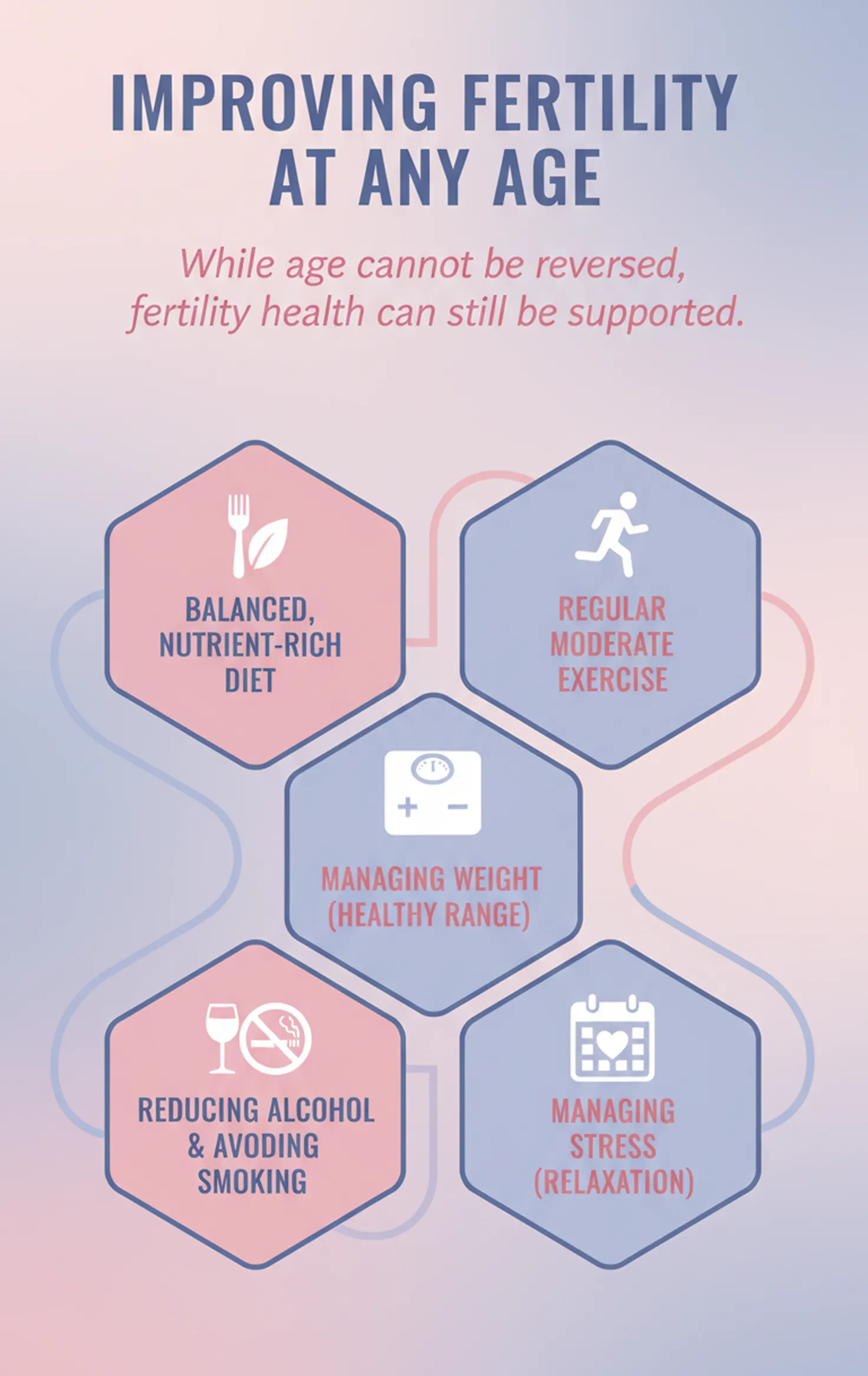
While age cannot be reversed, fertility health can still be supported.
Helpful strategies include:
For many people, improving general health can enhance reproductive function and increase the chances of conception.
It is important to consult a healthcare professional if:
Early consultation can help identify issues sooner and improve treatment outcomes.
Improving sperm count, motility, and quality is often possible through a combination of healthy lifestyle choices, proper nutrition, and medical support when needed.
Since sperm health reflects overall well-being, small daily improvements can lead to significant long-term benefits.
For many men, making consistent changes in diet, exercise, stress management, and environmental exposure can dramatically improve fertility potential within a few months.
If challenges persist, seeking medical evaluation ensures that underlying conditions are identified and treated early.