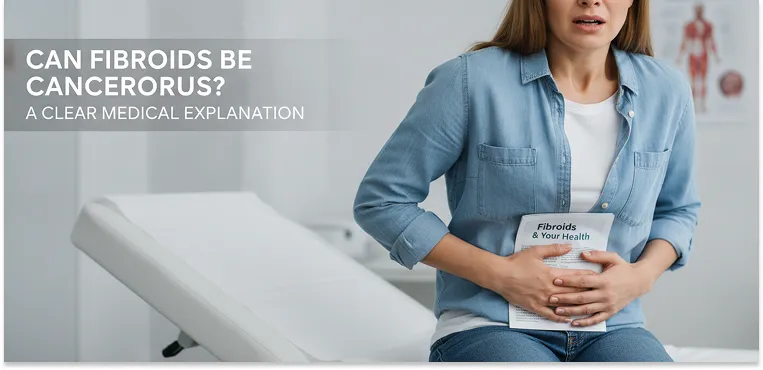
In almost all cases, fibroids are not cancerous.
Fibroids are non-cancerous (benign) growths made of muscle and fibrous tissue in or around the uterus. They usually grow slowly and often stay the same size.
In very rare cases, a type of cancer called uterine leiomyosarcoma can develop in the uterus and may look like a fibroid at first. But this is not a fibroid turning into cancer—it is a completely separate and rare condition.
Key points to remember:
Doctors say that fibroids are almost always non-cancerous. They are common growths caused by hormones, not cancer.
Many patients simply get reassurance or treatment from a fibroid treatment clinic when symptoms need attention.
Most of the time, doctors are not concerned about cancer when they find fibroids. Their focus is on treating symptoms like heavy bleeding or pain. Fibroids also do not increase the risk of uterine cancer.
Simple takeaway:
Although fibroids and uterine cancer can sometimes cause similar symptoms, they are fundamentally different conditions.
Here is a simple comparison:
Feature | Fibroids | Uterine Cancer |
Nature | Benign (non-cancerous) growth | Malignant (cancerous tumor) |
Cause | Hormones (estrogen & progesterone) | Genetic mutations in cells |
Growth speed | Usually slow | Often faster and uncontrolled |
Spread | Does not spread to other organs | Can spread (metastasize) |
Symptoms | Heavy periods, pelvic pressure | Abnormal bleeding, weight loss, pain |
Risk level | Very common and usually harmless | Rare but serious |
Treatment | Medication or surgery if needed | Surgery, radiation, chemotherapy |
This is one of the most common fears—but the answer is:
Fibroids do not transform into cancer.
A fibroid is a stable type of growth made from smooth muscle cells. Cancer develops through a completely different biological process involving mutations and abnormal cell division.
What can happen, although very rarely, is:
But this does not mean a fibroid “became” cancer. It simply means two different conditions can sometimes look similar in early stages.
A fertility specialist clinic often stress this point to reduce unnecessary fear.
Cancer linked to fibroid-like symptoms is extremely rare.
To put it into perspective:
Most women diagnosed with fibroids will never experience cancer related to them.
Even in surgical cases where fibroids are removed, finding an unexpected cancer is very uncommon.
So while awareness is important, the actual risk is low.
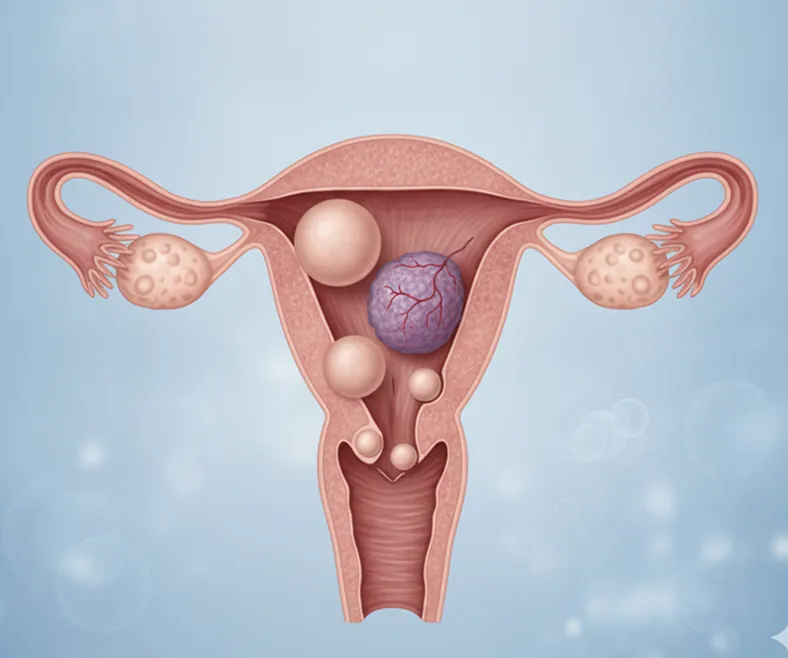
Even though different types of fibroid are usually harmless, it’s important to pay attention to changes in your body.
You should consult fertility sepcialists if you notice:
These symptoms do not automatically mean cancer, but they should always be evaluated by a healthcare professional.
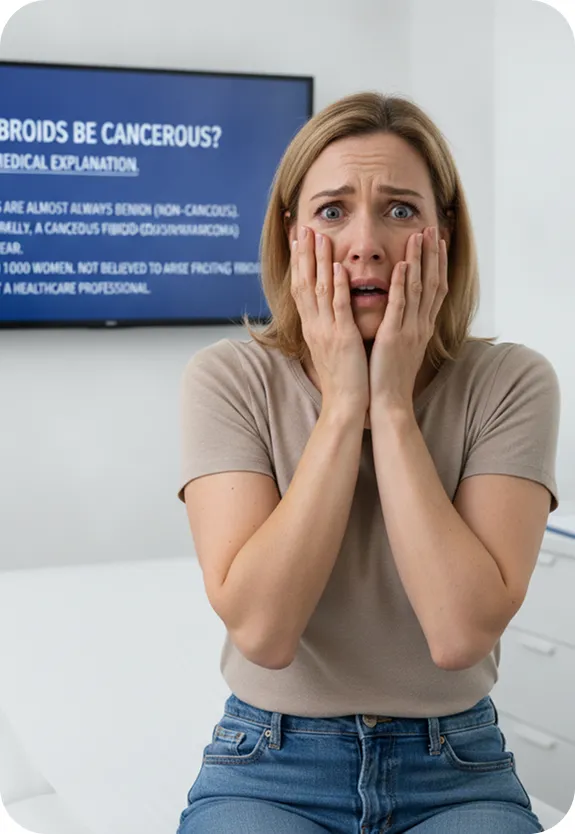
Doctors use simple and safe tests to understand whether a growth is a fibroid or something more serious.
Most of the time, they can confirm it is harmless without any invasive procedures. They may use:
In most situations, these tests clearly show that the growth is a benign fibroid and not cancer.
It’s easy to understand why people get worried. Fibroids and uterine cancers can sometimes share similar symptoms, such as:
In addition, fibroids can sometimes grow large, which may feel alarming.
Another reason for confusion is that medical imaging may not always provide instant clarity, especially when fibroids are degenerating or changing shape.
However, experienced IVF doctors are trained to differentiate between the two using imaging patterns and patient history.
Most fibroids do not require emergency attention. But there are certain situations where you should definitely seek medical advice.
You should see a doctor if:
Even in these cases, the most likely explanation is still benign fibroids, not cancer. But evaluation is essential for safety.
Early consultation helps rule out rare conditions and provides peace of mind.
Many women live normal, healthy lives with fibroids. In fact, most fibroids:
Treatment is only needed if fibroid symptoms interfere with daily life. Options may include medication, hormonal therapy, or minimally invasive procedures.
The important takeaway is that fibroids are manageable and usually not dangerous.
Learn More: Foods That May Help Support Fibroid Shrinkage Naturally
So, can fibroids be cancerous? No—fibroids are not cancer and do not turn into cancer.
They are very common and harmless growths caused mainly by hormones. In rare cases, a different uterine cancer may look similar, but it is not a fibroid becoming cancer.
Key points:
If you have fibroids, there’s no need to panic—just get a proper medical check. Most cases are completely manageable and not dangerous.