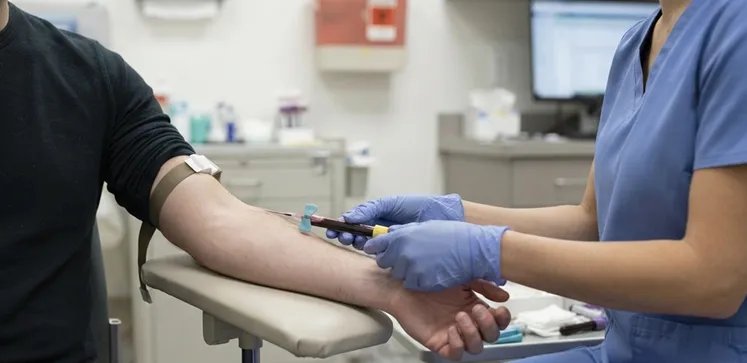
A karyotype chromosome blood test checks your chromosomes for changes that may affect fertility or pregnancy.
At Luna Fertility, we provide simple, consultant-led karyotype testing in London with specialist laboratory analysis.
If you’re facing infertility, recurrent miscarriages, or IVF challenges, we can help you find out if chromosome testing could help.
Choosing the right clinic can make genetic testing easier to understand and less stressful.
At our fertility clinic in London, your test is arranged as part of a wider fertility assessment rather than viewed in isolation.
Our approach includes:
We aim to give you useful information that can help guide the next stage of your fertility care.
A karyotype blood test checks for chromosome changes that may affect fertility or pregnancy. We recommend it when your fertility history suggests that chromosome testing may be helpful.
Some chromosome changes may contribute to unexplained infertility. Karyotype testing can help investigate whether a chromosomal factor may be involved.
At Luna Fertility, we assess your individual fertility history before recommending testing. Your consultant can explain the results and whether any further investigation may be appropriate.
Certain chromosome abnormalities can affect sperm production and contribute to severe male infertility. A karyotype test may be included in your fertility assessment.
We can review your semen results and medical history to determine whether chromosome testing could provide useful information.
Some recurrent miscarriages may be linked to chromosome changes in either partner. Karyotype testing can identify certain structural chromosome abnormalities.
If you have experienced repeated pregnancy loss, our consultants can discuss whether testing may be appropriate for you or your partner.
Repeated unsuccessful IVF cycles may require further investigation. In some cases, karyotype testing can check for chromosome changes that could be relevant.
Our consultants can review your previous treatment and explain whether chromosome testing may help guide your next steps.
A karyotype blood test examines your chromosomes to check for changes in their number or structure.
At Luna Fertility, we provide karyotype testing to investigate certain chromosomal conditions linked to fertility and pregnancy concerns.
The test can help identify:
A karyotype test does not detect every genetic condition.
Our fertility consultants assess your medical and fertility history to determine whether karyotype testing is appropriate for you and explain your results clearly.
At Luna Fertility, we recommend karyotype testing when your fertility history or previous investigations indicate a possible chromosome-related factor.
Your consultant will assess your individual circumstances before recommending the test. You could need a karyotype blood test if you have:
Our fertility consultants review your medical history and previous test results to determine whether karyotype testing is suitable for you.
A karyotype blood test is suitable for both men and women when chromosome changes are linked to fertility or pregnancy concerns.
At Luna Fertility, our consultants assess your circumstances and recommend the right testing for your needs.
For men, karyotype testing is used when very low or absent sperm production requires further investigation. It can identify chromosome changes linked to certain forms of male infertility.
Our consultants review your fertility results and explain whether chromosome testing can help identify an underlying cause.
For women, karyotype testing is used for recurrent miscarriages, unexplained infertility, or findings linked to chromosome changes.
At Luna Fertility, we explain your results clearly and discuss the appropriate next steps based on your individual fertility needs.
At Luna Fertility, we keep the karyotype testing process simple and explain each step clearly.
Your consultation starts with a review of your fertility history and reason for testing. Our consultant explains the test and answers your questions.
A small blood sample is collected by a trained healthcare professional. No special preparation is required for the blood test.
Your sample is sent to a specialist laboratory for chromosome analysis. Laboratory specialists examine the number and structure of your chromosomes.
Once your results are ready, your consultant explains them in relation to your fertility history. We also discuss any appropriate follow-up and next steps.
Before your test, share any relevant fertility or medical information with your consultant. This helps us understand your situation and assess your results in the right context.
Before your appointment, it is helpful to have:
At Luna Fertility, your consultant will guide you through the process and answer any questions before your blood sample is taken.
A karyotype test checks the number and structure of chromosomes.
Your results show whether the chromosomes have the expected number and whether there are visible structural changes.
Example of Karyotype Results
Result | What It Shows |
46,XX | Normal female chromosome pattern |
46,XY | Normal male chromosome pattern |
47,XX,+21 | Extra chromosome 21 |
46,XX,t(14;21) | Chromosome rearrangement |
At Luna Fertility, your consultant will explain your result clearly and discuss what it means for your fertility or pregnancy care.
The cost of a karyotype blood test in London depends on the testing required and your individual fertility assessment.
At Luna Fertility, we provide clear information about the test and its costs before you proceed. The overall cost can depend on:
At Luna Fertility, we explain the costs clearly before testing, so you know what to expect.
Having chromosome testing through a fertility clinic can make it easier to connect the result with your wider reproductive health.
Key benefits include:
Book your consultation to get personalised, consultant-led karyotype testing in London at Luna Fertility.
Our fertility specialists will assess your needs, explain the test, and guide you through the process.
Contact Luna Fertility today to book your consultation.