Experiencing a miscarriage is already emotionally painful, but when it happens more than once, it can feel confusing, overwhelming, and even isolating. Many people start wondering what is going wrong and whether there is something they are missing.
Recurrent miscarriage, also known as recurrent pregnancy loss, is a condition where pregnancy loss happens repeatedly. It often brings a mix of fear, stress, and unanswered questions, especially for couples trying to build a family. In such situations, many people also look for the best recurrent miscarriage clinic to get proper testing and guidance.
This guide is designed to give you a clear, simple, and complete explanation of recurrent miscarriage—what it means, why it happens, and what medical options are available to support a healthy future pregnancy.
Recurrent miscarriage is when a person loses two or more pregnancies in a row, usually before 20–24 weeks of pregnancy. Doctors often start checking for possible causes after two repeated miscarriages, especially if there is no clear reason.
It is not very common, but it does need medical attention to understand what might be happening. In simple terms:
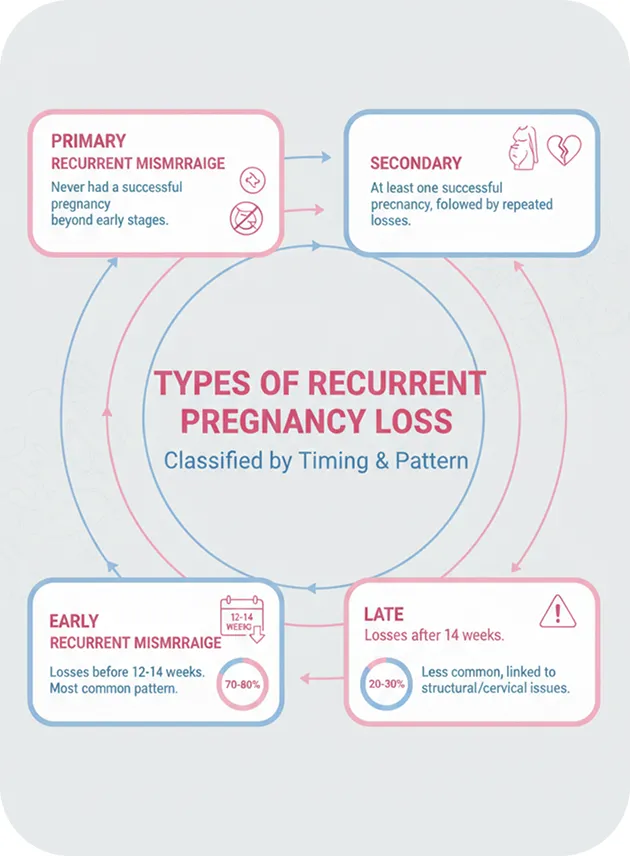
Recurrent miscarriage is not a single condition—it can be classified into different types depending on timing and pattern.
1. Primary Recurrent Miscarriage
This occurs when a person has never had a successful pregnancy beyond the early stages.
2. Secondary Recurrent Miscarriage
This happens when a person has had at least one successful pregnancy in the past, followed by repeated pregnancy losses.
3. Early Recurrent Miscarriage
Losses occur in the first trimester (before 12–14 weeks). This is the most common pattern.
4. Late Recurrent Miscarriage
Losses occur in the second trimester (after 14 weeks but before viability). This is less common and often linked to structural or cervical issues.
Recurrent miscarriage can happen for many different reasons, and sometimes no clear cause is found even after testing.
In most cases, it is linked to a combination of medical, genetic, or lifestyle factors.
Even if none of these are present, recurrent miscarriage can still occur, which is why proper medical evaluation is important.
Some people are more likely to experience recurrent miscarriage due to certain health, age, or lifestyle factors.
Having these risk factors does not mean miscarriage will happen, but it can increase the chances.
These include:
It is important to note that having risk factors does not guarantee miscarriage—it only increases the probability.

Recurrent miscarriage does not always present early warning signs before pregnancy loss occurs. However, during early pregnancy, some symptoms may indicate a problem.
Possible warning signs include:
However, many pregnancies with mild symptoms continue normally, so symptoms alone cannot confirm miscarriage.
Doctors diagnose recurrent miscarriage by looking at your medical history and running a few important tests to find the possible cause.
The goal is to understand why the losses are happening so that the right treatment can be given.
Common steps in diagnosis include:
These tests help doctors identify underlying issues and plan the best way to support a healthy future pregnancy.

Recurrent miscarriage is not only a physical condition—it has a strong emotional impact.
Many individuals experience:
It is important to understand that miscarriage is rarely caused by something the person did. Emotional support, counseling, or support groups can be extremely helpful during this time.
Treatment for recurrent miscarriage depends on the underlying cause found during medical evaluation. In many cases, with the right care and support, a healthy pregnancy is still possible.
Common treatment options include:
Doctors usually create a personalized treatment plan based on test results to improve the chances of a successful pregnancy.
While not all miscarriages can be prevented, certain steps can improve pregnancy outcomes.
Before conception, it is helpful to:
Preconception care is especially important for individuals with a history of miscarriage.
It is important to seek medical advice if:
Early evaluation can help identify treatable causes and improve chances of a healthy pregnancy in the future.
Learn More: When to See a Fertility Specialist: Signs You Should Not Ignore

Recurrent miscarriage is a deeply emotional and medically complex condition, but it does not mean the end of the journey to parenthood. With modern medical testing and personalized treatment, many people with recurrent pregnancy loss go on to have successful pregnancies.
Understanding the possible causes, knowing the risk factors, and seeking medical help early can make a big difference in outcomes. At the same time, emotional support is just as important as physical treatment during this journey.
If you are experiencing recurrent miscarriage, speaking with a fertility or reproductive health specialist can help you get clear answers, proper guidance, and renewed hope for the future.