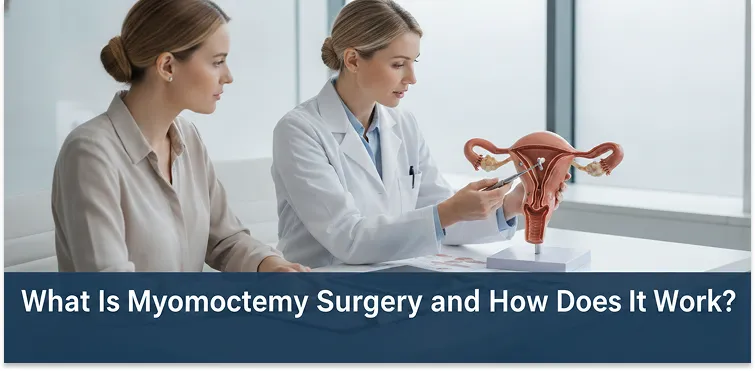
Myomectomy is a surgical procedure used to remove uterine fibroids while keeping the uterus intact. It is often recommended for women who experience symptoms like heavy menstrual bleeding, pelvic pain, or fertility issues caused by fibroids.
Many patients first explore care at a fibroid treatment clinic to understand their options before choosing surgery.
Unlike a hysterectomy, which removes the entire uterus, a myomectomy focuses only on removing fibroids. This makes it an important option for women who wish to preserve their fertility or avoid the removal of the uterus.
In this guide, we’ll explain what myomectomy surgery is, how it works, who needs it, the different types of procedures, and what to expect during recovery.
A myomectomy is a surgical procedure that removes uterine fibroids, also known as leiomyomas.
Fibroids are non-cancerous growths that develop in or around the uterus and can vary in size from very small to quite large.
The goal of myomectomy is simple:
This surgery is commonly performed by a gynecologist or a specialized gynecologic surgeon.
Myomectomy is usually recommended when fibroid symptoms start affecting a woman’s health or daily life. Common reasons include:
In many cases, top fertility doctors suggest myomectomy when medications or non-surgical treatments are not effective.
During a myomectomy, the surgeon carefully removes fibroids from the uterus. The uterus is then repaired and stitched back together.
The general process involves:
The exact technique depends on the size, number, and location of fibroids.
A myomectomy may be recommended for women who:
It is especially common among women of reproductive age who want to maintain the ability to have children.
There are several types of myomectomy procedures.
The best option depends on the size, number, and location of fibroids.
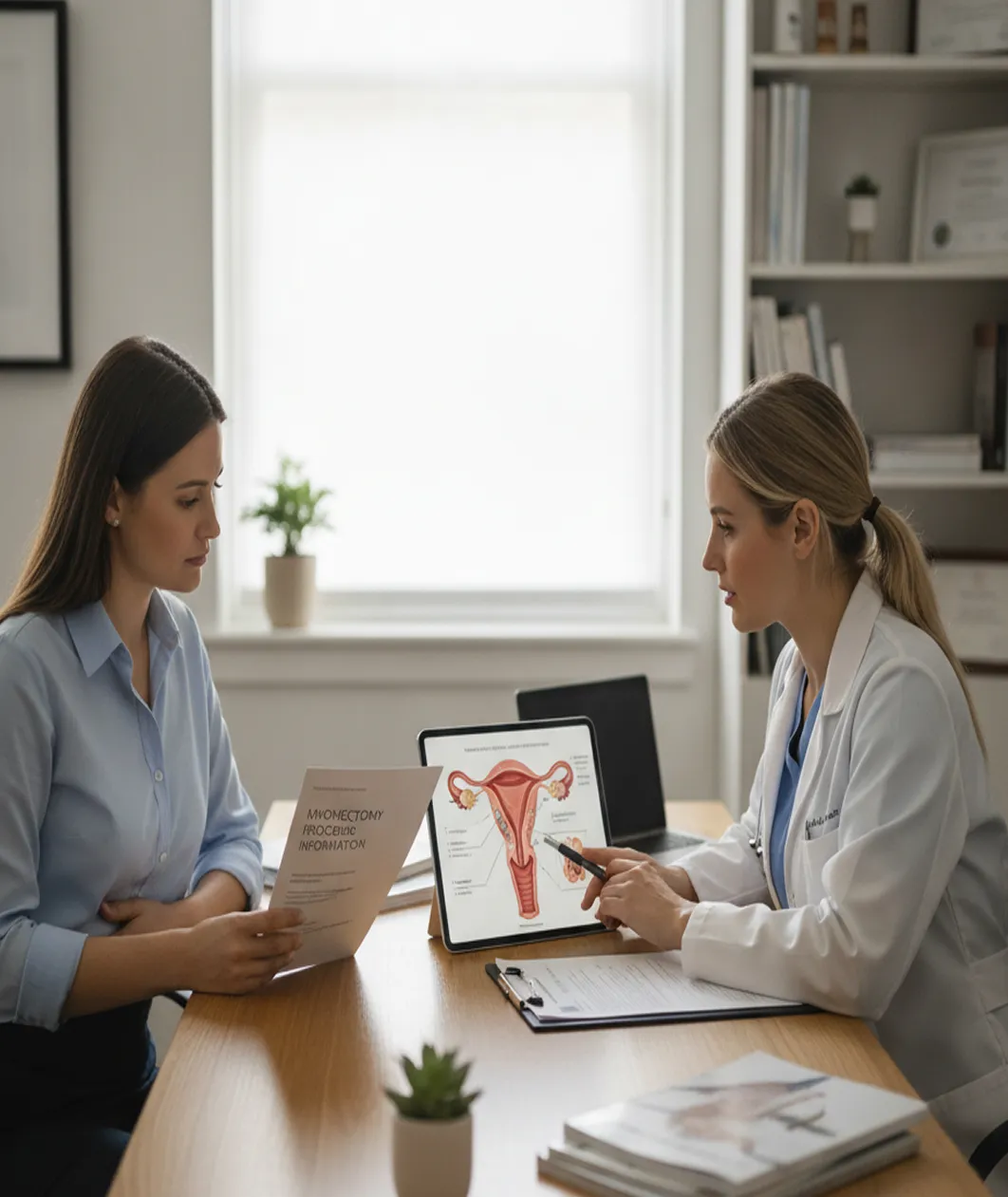
Abdominal myomectomy is a surgery where a larger cut is made in the lower belly to remove fibroids from the uterus. It is usually used for big, many, or deep fibroids.
It gives the surgeon full access and works well for complex cases. But recovery is slower, pain is higher, and it leaves a more visible scar.
Laparoscopic myomectomy is a keyhole surgery using small cuts and a camera to remove fibroids. It is less invasive than open surgery.
It helps you recover faster with less pain and smaller scars. However, it is not suitable for very large fibroids.
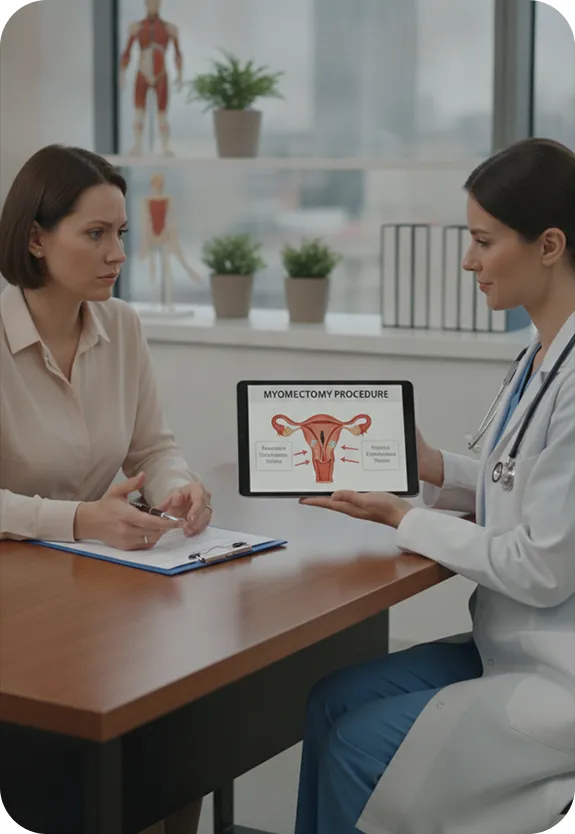
Robotic-assisted myomectomy uses robotic tools controlled by the surgeon for more precision. It is an advanced form of keyhole surgery.
It is helpful for complex cases and may reduce blood loss. But it is costly and not available everywhere.
Hysteroscopic myomectomy is done through the vagina using a thin camera, with no cuts on the belly. It treats fibroids inside the uterus.
It has a quick recovery and no visible scars. But it only works for certain fibroids inside the uterine cavity.
Choosing the right type of myomectomy depends on several factors:
Your doctor will usually perform imaging tests like an ultrasound or an MRI before deciding the best approach.
Although techniques differ, most myomectomy surgeries follow similar steps:
The surgery can last anywhere from 1 to 3 hours, depending on complexity.
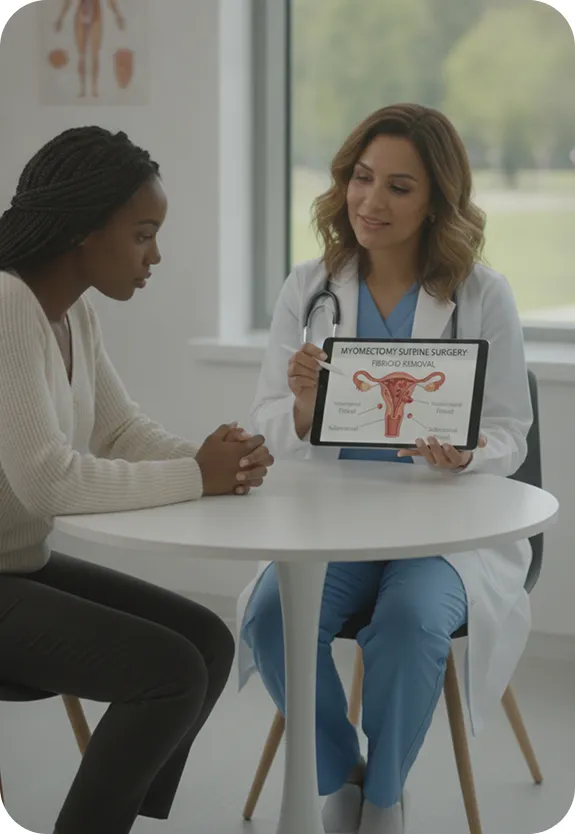
Myomectomy offers several important benefits:
For many women, it significantly improves daily comfort and reproductive health.
Like all surgeries, myomectomy carries some risks, such as:
Your surgeon will take steps to minimize these risks.
Recovery time depends on the type of procedure:
During recovery, you may experience:
Helpful recovery tips include:
One of the main reasons women choose myomectomy is to preserve fertility.
After surgery:
Your doctor will guide you based on your specific condition.
Depending on your condition, alternatives may include:
Each option has pros and cons, so medical advice is essential.
The cost of myomectomy varies widely depending on:
Generally:
It’s best to consult a fertility clinic directly for an accurate estimate.
Myomectomy is a highly effective surgical option for women suffering from symptomatic uterine fibroids. It helps relieve pain, reduce heavy bleeding, and improve quality of life while preserving the uterus.
The right treatment depends on your symptoms, fibroid condition, and future fertility goals. With modern surgical techniques like laparoscopic and robotic-assisted myomectomy, recovery is faster, and outcomes are often excellent.
If you are experiencing symptoms of fibroids, consulting a qualified gynecologist is the first step toward understanding whether myomectomy is right for you.