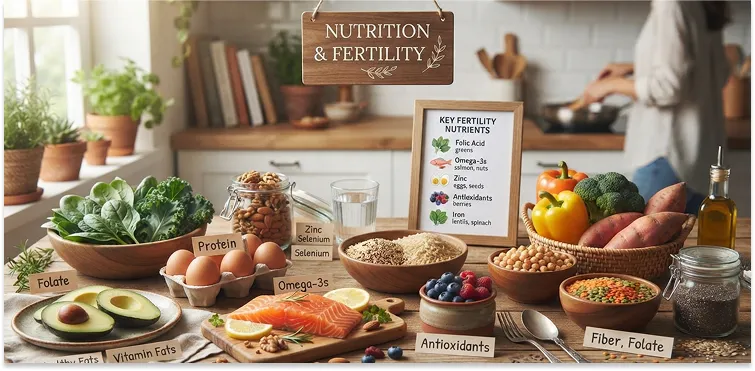
Nutrition can play an important role when you are trying to conceive. While no specific food can guarantee pregnancy, a balanced diet can provide nutrients that support reproductive and overall health.
Foods rich in vitamins, minerals, healthy fats, protein, and antioxidants can support normal hormone function, egg health, and sperm health.
In this guide, we’ll explore the best foods for fertility, essential nutrients, foods to limit, and simple dietary habits that can support reproductive health.
Your reproductive system depends on many nutrients to function properly.
The body uses nutrients to support hormone production, egg and sperm development, cellular health, and normal metabolism.
For women, a nutritious diet can support menstrual and ovulatory health and help prepare the body for pregnancy. For men, healthy eating may support sperm production, sperm movement, and sperm quality.
Nutrition is only one part of fertility, however. Age, medical conditions, hormones, lifestyle, genetics, and reproductive health can all influence the ability to conceive.
There is no single “fertility food” that can cause pregnancy. Instead, focus on a varied diet built around whole and minimally processed foods.
Fruits and vegetables provide vitamins, minerals, fiber, and antioxidants. Berries, oranges, leafy greens, tomatoes, peppers, carrots, broccoli, and avocados are useful choices.
Try to include different colors throughout the week because different plant foods provide different nutrients and protective compounds.
Whole grains such as oats, brown rice, quinoa, whole-wheat bread, and barley provide fiber and important nutrients.
Choosing whole grains more often than refined carbohydrates can help create a balanced eating pattern and support healthy blood sugar levels.
Healthy fats are important for overall health and normal hormone function. Good sources include olive oil, avocado, fatty fish, nuts, and seeds.
Replacing some foods high in saturated or trans fats with unsaturated fats can be a simple improvement to your diet.
Protein supports the growth and repair of body tissues and is an important part of a balanced fertility diet.
Include a mixture of fish, eggs, poultry, beans, lentils, peas, tofu, and other plant-based protein sources.
Nuts and seeds provide healthy fats, protein, fiber, and minerals such as zinc and selenium.
Almonds, walnuts, pumpkin seeds, chia seeds, and flaxseeds can be easily added to breakfast, salads, or snacks.
Milk, yogurt, and other dairy products can provide protein, calcium, and other nutrients. If you consume dairy, choose options that fit your overall dietary needs.
Fermented foods such as yogurt and kefir may also contribute to a healthy gut microbiome, although more research is needed to understand the direct relationship between gut health and infertility.
A fertility-supportive diet should provide a range of essential nutrients rather than focusing on one vitamin or mineral.
Folate is a B vitamin found naturally in foods such as leafy green vegetables, beans, peas, citrus fruits, and fortified grains. Folic acid is the form used in many supplements and fortified foods.
Adequate folic acid before and during early pregnancy is especially important because it helps reduce the risk of neural tube defects.
Iron helps transport oxygen throughout the body. Good food sources include lean meat, beans, lentils, spinach, and fortified cereals.
Women with heavy menstrual bleeding may be particularly at risk of iron deficiency and should discuss supplementation with a healthcare professional when appropriate.
Zinc contributes to normal cell function and reproductive health. Oysters, meat, poultry, dairy products, beans, nuts, and seeds can provide zinc.
Vitamin D is important for bone health, immune function, and many other processes in the body. Dietary sources include fatty fish, egg yolks, and fortified foods.
If you are concerned about vitamin D deficiency, a healthcare professional can advise whether testing or supplementation is appropriate.
Antioxidants help protect cells from oxidative stress. Fruits, vegetables, nuts, seeds, and whole grains contain a range of antioxidant compounds.
Rather than relying on high-dose antioxidant supplements, it is generally better to build a diet rich in a variety of plant foods.
Omega-3 fatty acids are found in foods such as salmon, sardines, trout, walnuts, chia seeds, and flaxseeds.
Fatty fish can be a particularly useful source, but people trying to conceive should choose fish that are lower in mercury and follow local food-safety guidance.
Selenium is involved in antioxidant defense and normal thyroid function. Brazil nuts, seafood, eggs, meat, and some grains can provide selenium.
Because Brazil nuts can contain very high amounts of selenium, they should be eaten in moderation.
B vitamins help the body convert food into energy and support normal cellular processes.
Whole grains, legumes, eggs, meat, dairy products, leafy greens, and fortified foods can contribute to B-vitamin intake.
When trying to conceive, women can benefit from a balanced diet that provides a wide range of vitamins, minerals, healthy fats, and protein.
These nutrients support overall health and help the body maintain normal reproductive function.
Some fertility-friendly foods to include regularly are:
Key nutrients such as folate, iron, vitamin D, and omega-3 fatty acids can support overall reproductive health.
When trying to conceive, men can benefit from a balanced diet rich in protein, healthy fats, vitamins, minerals, and antioxidants.
These nutrients can support overall health and normal sperm production.
Some fertility-friendly foods to include regularly are:
Nutrients such as zinc, selenium, folate, vitamin C, vitamin E, and omega-3 fatty acids can help support overall reproductive and sperm health.
You do not need to follow a strict diet when trying to conceive.
However, limiting certain foods and drinks can help support overall health and reproductive health.
Consider limiting:
The goal is not perfection. Focus on a balanced, varied diet and make healthier choices most of the time.
A fertility-friendly diet does not have to be complicated.
Focus on balanced meals with whole foods, plenty of vegetables, healthy fats, and quality protein.
A simple daily meal plan could include:
The key is to eat a variety of nutrient-rich foods regularly rather than relying on specific “fertility foods” or following a restrictive diet.
Good nutrition remains important during fertility treatment, including IVF (in vitro fertilization) and IUI (intrauterine insemination).
A balanced diet can help support your overall health throughout treatment.
Focus on:
Avoid starting new supplements or making major dietary changes during treatment without first discussing them with your fertility specialist.
Some people may need supplements to meet their nutritional needs when trying to conceive.
However, supplements should complement a healthy diet, not replace it.
Common nutrients to discuss with your healthcare provider include:
More supplements do not always mean better fertility.
Talk to your doctor or fertility specialist before starting new supplements, especially during fertility treatment.
Learn more
Nutrition is only one part of reproductive health. Simple daily habits can also support overall fertility and well-being.
Helpful habits include:
The goal is to build healthy, sustainable habits rather than make sudden or extreme lifestyle changes.
A healthy diet can support your reproductive health, but it cannot treat every cause of infertility. Sometimes, medical evaluation is needed to understand what may be affecting conception.
Consider speaking with a fertility specialist if you have been trying to conceive without success, have irregular or absent periods, known reproductive health concerns, or concerns about sperm health. A fertility specialist clinic can provide appropriate assessment and guidance.
A specialist can assess both partners when needed and recommend relevant tests or fertility treatments based on your individual circumstances.
Good nutrition can support reproductive health, but no single food can guarantee pregnancy. A varied diet with fruits, vegetables, whole grains, healthy fats, protein, nuts, and seeds can provide important nutrients for the body.
You do not need a strict fertility diet. Focus on balanced meals, healthy lifestyle habits, and supplements such as folic acid when recommended by your healthcare provider.
If you are having difficulty conceiving, nutrition is only one part of the picture. A fertility specialist can help identify possible causes and guide you toward the right next steps.