Finding out why pregnancy is not happening can be difficult, especially when the cause may involve ovulation, hormones, or reproductive health.
Fertility testing can help identify possible factors affecting your ability to conceive and provide a clearer picture of your fertility.
This guide explains the types, options, and uses of female fertility tests, including what they check and when they may be recommended.
There is no single test that can measure every aspect of female fertility.
Instead, a fertility assessment may include several tests that examine different parts of the reproductive system.
Depending on your circumstances, testing may include:
Your healthcare provider can recommend the most appropriate combination rather than automatically performing every available test.
Different fertility tests assess different aspects of reproductive health.
Depending on your symptoms and fertility goals, your healthcare provider may recommend tests to check ovulation, hormones, ovarian reserve, the fallopian tubes, or the uterus.
wOvulation testing helps determine whether an egg is being released from the ovary and when ovulation is likely to occur.
Common options include:
Ovulation testing can be particularly useful for women with irregular periods or concerns about whether they are ovulating regularly.
Blood tests can measure hormones involved in the menstrual cycle and reproductive function.
Depending on the assessment, testing may include hormones such as:
The timing of some tests matters because hormone levels naturally change throughout the menstrual cycle.
Ovarian reserve tests help estimate the number of eggs remaining in the ovaries. The main tests used to assess ovarian reserve include:
These tests help assess ovarian reserve but do not measure egg quality or guarantee natural pregnancy.
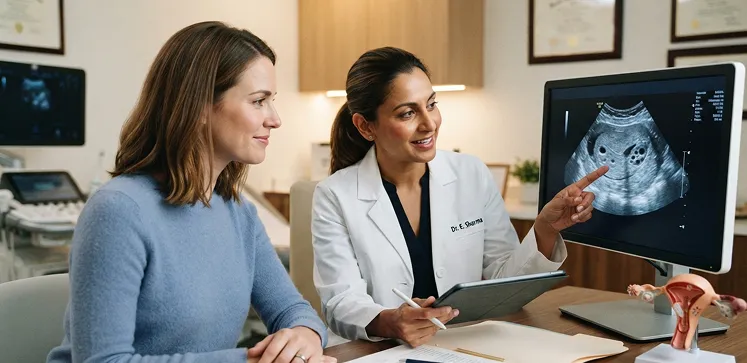
A pelvic or transvaginal ultrasound allows a clinician to look at the reproductive organs.
It may help assess:
Ultrasound can therefore provide useful information about both ovarian activity and the anatomy of the reproductive system.
Open fallopian tubes are important because they provide the pathway through which sperm and egg can meet.
Tests used to assess the tubes include:
These tests may be recommended when there is a history of pelvic infection, previous surgery, endometriosis, or unexplained difficulty becoming pregnant.
The uterus needs to provide a suitable environment for an embryo to implant and develop.
Ultrasound can identify some uterine abnormalities, while other investigations may be recommended when more information is needed.
Depending on the situation, these may include:
Women can choose from different fertility testing options depending on their needs and circumstances.
Testing may be done at home, in a clinic, or through a basic or more comprehensive fertility assessment.
Some fertility tests can be performed at home. Ovulation predictor kits and certain hormone testing kits are common examples.
At-home testing can be convenient and may help identify the fertile window.
However, home tests provide only part of the fertility picture and cannot replace a complete clinical assessment when there are ongoing fertility concerns.
Clinic-based fertility testing provides a more complete assessment.
A fertility specialist clinic or healthcare professional can combine your medical history, examination, blood tests, ultrasound findings, and other investigations.
This approach is particularly useful when fertility has been affected by irregular periods, previous reproductive conditions, pelvic surgery, or unexplained difficulty conceiving.
Each fertility test looks at a different part of reproductive health.
The table below provides a quick overview of the main purpose of each female fertility test and what it helps assess.
Fertility Test | Main Purpose |
Ovulation predictor test | Identifies the LH surge before ovulation |
Progesterone blood test | Checks for evidence of ovulation |
AMH test | Assesses ovarian reserve |
FSH and oestradiol tests | Evaluates ovarian function |
Thyroid and prolactin tests | Checks hormonal factors that may affect fertility |
Transvaginal ultrasound | Assesses the ovaries, follicles, uterus, and endometrium |
Antral follicle count | Estimates visible small follicles in the ovaries |
HSG | Checks whether the fallopian tubes are open |
HyCoSy | Uses ultrasound to assess fallopian tube openness |
Hysteroscopy | Examines the inside of the uterus |
The most suitable fertility tests depend on your individual circumstances.
For example:
Age, previous pregnancies, menstrual history, previous pelvic procedures, and other reproductive factors can also influence the testing plan.
Female fertility testing can involve several different procedures.
Blood tests require a small sample of blood, while ultrasound usually involves imaging the reproductive organs through a transvaginal scan.
Some tests, such as HSG, HyCoSy, or hysteroscopy, involve specific procedures and may require additional preparation.
Not every test is performed during the same appointment. Some hormone tests need to be taken on particular days of the menstrual cycle.
Your clinician should explain what each test involves, when it should be performed, and what the results can and cannot tell you.
Preparation depends on the type of test.
Before your appointment, it can be helpful to have information about:
Some tests require cycle-specific timing, while others may have additional instructions. Follow the preparation guidance provided by your clinic.
Fertility testing may identify or provide clues about:
Importantly, fertility tests cannot explain every case of infertility.
A normal result does not guarantee pregnancy, and an abnormal result does not always mean pregnancy is impossible.
Learn more
Fertility testing can provide useful information about reproductive health and help guide the next steps. However, each test has limitations and cannot predict pregnancy on its own.
Benefits | Limitations |
Provides information about reproductive health | No single test measures overall fertility |
Can identify potential fertility factors | Some results can vary over time |
Helps guide further investigation | Results do not guarantee pregnancy |
May identify ovulation problems | Ovarian reserve tests do not directly measure egg quality |
Can assess reproductive anatomy | Some procedures can be uncomfortable |
Helps inform fertility treatment decisions | Additional testing may be needed |
Once testing is complete, your healthcare provider can review the results alongside your symptoms, medical history, age, and fertility goals.
Sometimes the results are reassuring, and no immediate treatment is required. In other cases, further investigations or fertility treatment may be recommended.
Depending on the findings, next steps could include monitoring ovulation, treating an underlying condition, assessing the fallopian tubes or uterus in more detail, or discussing fertility treatment options.
The important point is that fertility testing is usually the beginning of understanding your reproductive health, not the final answer.
If you are trying to conceive and want a clearer understanding of your reproductive health, a female fertility assessment can help identify which areas may need further investigation.
A personalised assessment can bring together your medical history, menstrual cycle information, hormone testing, ovarian reserve assessment, ultrasound, and other fertility investigations when appropriate.
Book a female fertility assessment to discuss your fertility concerns and find out which tests may be suitable for you.