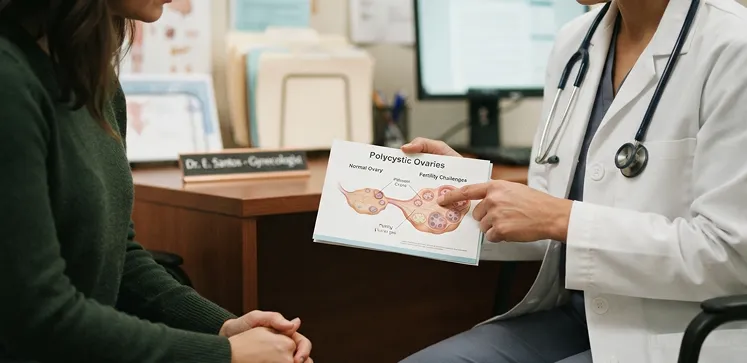
Polycystic ovary syndrome (PCOS) can make getting pregnant harder, mainly because it may disrupt regular ovulation.
However, PCOS does not mean you cannot get pregnant. Many people with PCOS conceive naturally or with fertility support.
Understanding how PCOS affects ovulation can help you take the right steps to improve your chances of pregnancy.
PCOS can affect fertility mainly by causing irregular or absent ovulation. Hormonal changes linked to PCOS can also affect ovarian follicles, insulin sensitivity, and menstrual cycles.
As a result, getting pregnant may take longer, but PCOS does not mean pregnancy is impossible.
Ovulation is when the ovary releases a mature egg that can be fertilized by sperm. With PCOS, this process may not happen regularly.
Common ways PCOS can affect ovulation include:
PCOS can change the balance of hormones involved in ovulation. Higher androgen levels and insulin resistance may make it harder for ovarian follicles to develop normally.
Here is how these changes can affect fertility:
These factors can work together, making conception less predictable.
Having PCOS does not automatically mean you have poor-quality eggs.
PCOS may be associated with a higher number of developing follicles, but the number of eggs available and the quality of those eggs are not the same thing.
Consider these important points:
Learn more
Irregular periods do not mean pregnancy is impossible.
The main challenge is that they can make ovulation and the fertile window harder to predict.
This can affect conception in several ways:
With the right evaluation and support, however, many people with PCOS can improve ovulation and increase their chances of getting pregnant.
Yes, you can get pregnant with PCOS. The condition may make conception harder because it can cause irregular ovulation, but it does not mean pregnancy is impossible.
Ways to Improve Your Chances
With the right care, many people with PCOS can successfully become pregnant.
There is no single solution that works for everyone with PCOS. A combination of lifestyle changes, ovulation support, and medical treatment can often improve fertility.
If PCOS is preventing regular ovulation, your healthcare provider may recommend treatment to help stimulate egg release. Tracking your menstrual cycle and looking for signs of ovulation can also help identify your fertile days.
For people who are overweight, even a modest amount of weight loss may help improve insulin sensitivity and menstrual regularity.
However, weight is not the only factor in PCOS, and fertility care should never be reduced to weight alone.
If you are already at a healthy weight, the goal should be maintaining balanced nutrition and overall health rather than trying to lose weight unnecessarily.
There is no special “PCOS fertility diet,” but a balanced eating pattern can support metabolic and reproductive health.
Focus on foods such as:
Reducing highly processed foods and excessive added sugar may also help support healthier blood glucose levels.
Improving insulin sensitivity can be helpful for people with PCOS, particularly when insulin resistance is present.
Regular physical activity, balanced meals, adequate sleep, and treatment recommended by your healthcare provider can all play a role.
Regular exercise can support insulin sensitivity, cardiovascular health, mood, and overall reproductive health.
A combination of aerobic activity and strength training can be useful. You do not need an extreme workout routine. Consistency is usually more important than intensity.
Poor sleep and ongoing stress can make it harder to maintain healthy habits and may affect hormonal and metabolic health. Aim for a consistent sleep schedule and make time for activities that help you relax.
Stress management does not guarantee pregnancy, but supporting your overall wellbeing can make the fertility journey easier to manage.
When lifestyle changes alone do not restore regular ovulation, infertility treatment may be an option.
Medications can help stimulate ovulation in people who do not ovulate regularly. Letrozole is commonly used as a first-line medication for ovulation induction in many people with PCOS.
Other medications may be considered depending on the individual’s circumstances. These treatments should be prescribed and monitored by a qualified fertility professional.
Once ovulation can be predicted or triggered, having intercourse during the fertile window can improve the opportunity for sperm and egg to meet.
This approach may be recommended with or without ovulation medication.
Intrauterine insemination (IUI) treatment involves placing prepared sperm directly into the uterus around the time of ovulation.
IUI may be considered when ovulation induction alone has not worked or when other fertility factors are present.
In vitro fertilization (IVF) treatment involves stimulating the ovaries, retrieving eggs, fertilizing them in a laboratory, and transferring an embryo into the uterus.
IVF is not automatically necessary just because someone has PCOS. It may be recommended when other fertility treatments have not been successful or when additional fertility factors make IVF more appropriate.
If you have PCOS and are having trouble getting pregnant, it may be helpful to speak with a fertility-specialised clinic.
You do not always need to wait a full year, especially if your periods are very irregular or absent.
When to Consider Fertility Help
Getting help early can identify the cause of irregular ovulation and give you more options to improve your chances of pregnancy.
Making a few healthy changes can support regular ovulation and improve your chances of pregnancy.
The following simple steps can help you better understand your cycle and support your fertility.
Track your periods and discuss irregular cycles with your healthcare provider. Understanding whether and when you ovulate is an important first step.
When ovulation is predictable, intercourse during the fertile window can increase the chance of conception.
Ovulation tracking methods can be helpful, although some tests may be less straightforward to interpret with PCOS.
Choose balanced meals, stay physically active, and focus on sustainable habits rather than restrictive diets or extreme exercise.
If insulin resistance or metabolic problems are present, work with your healthcare provider on an appropriate management plan. This may include lifestyle changes and, when appropriate, medication.
If you are not ovulating regularly despite lifestyle changes, fertility treatment can help. A specialist can assess your individual situation and recommend the most suitable option.
PCOS can make pregnancy more challenging, mainly because it can disrupt regular ovulation.
But PCOS does not mean you cannot get pregnant. Many people with PCOS conceive naturally or with relatively simple fertility support.
The best approach is to understand your ovulation pattern, support your metabolic and reproductive health, and seek professional advice when needed.
If ovulation remains irregular, treatments such as ovulation-inducing medication, IUI, or IVF can provide additional options for building your path toward pregnancy.