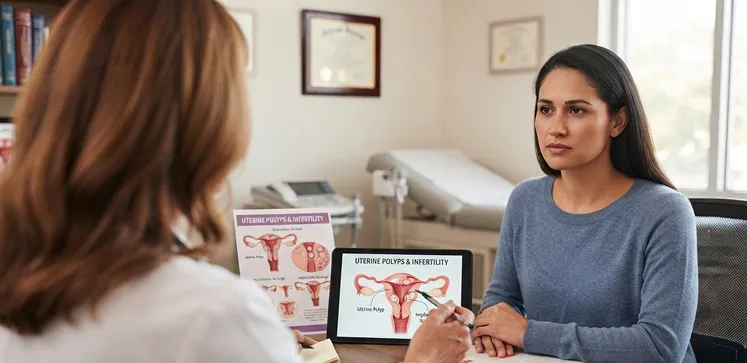
Uterine polyps are growths that form in the lining of the uterus. They are usually noncancerous, but they can sometimes cause abnormal bleeding and may affect fertility.
If you are trying to conceive, a uterine polyp may raise questions about whether it can make pregnancy more difficult or whether it needs to be removed.
The effect of a polyp depends on factors such as its size, location, and number. Understanding the causes, symptoms, diagnosis, and treatment options can help you make informed decisions with your fertility-specialised clinic.
Uterine polyps, also called endometrial polyps, are small growths that develop from the lining of the uterus. They can vary in size and may occur as a single polyp or several.
Most uterine polyps are noncancerous. However, some may contain abnormal cells, so removed polyps are often sent for laboratory testing.
Not all polyps cause symptoms or need treatment. The recommended approach depends on factors such as symptoms, polyp size and location, age, and plans for pregnancy.
Uterine polyps may affect fertility, especially when they grow inside the uterine cavity. They can change the shape of the uterine lining and may make it harder for an embryo to implant.
However, having a polyp does not necessarily mean you cannot become pregnant. Fertility can also be affected by ovulation, egg quality, sperm health, fallopian tube function, age, and other uterine conditions.
If you are having difficulty conceiving, a fertility specialist can assess whether the polyp may be contributing to the problem and discuss whether treatment could help.
The exact cause of uterine polyps is not always clear. However, they are thought to be influenced by hormonal activity, particularly estrogen.
Factors associated with a higher likelihood of developing endometrial polyps may include:
Because hormones influence the endometrium throughout the menstrual cycle, changes in hormonal stimulation may encourage localized overgrowth of endometrial tissue.
Having one or more risk factors does not mean that a person will definitely develop polyps.
Learn more
Some uterine polyps cause no symptoms and are discovered during an ultrasound or fertility investigation.
When symptoms occur, abnormal uterine bleeding is one of the most common signs. Possible symptoms include:
The symptoms of uterine polyps can overlap with other gynecological conditions, including fibroids, hormonal problems, and changes in the endometrium.
Proper testing is therefore important rather than relying on symptoms alone.
A healthcare professional may use one or more tests to look for an endometrial polyp.
A transvaginal ultrasound uses a small ultrasound probe placed inside the vagina to create images of the uterus and reproductive organs. It may identify an area of thickening or a growth within the uterine cavity.
Also called a saline sonogram, this test involves placing a small amount of sterile saline into the uterus while ultrasound images are taken. The saline helps outline the uterine cavity, making some polyps easier to see.
Hysteroscopy allows a specialist to examine the inside of the uterus using a thin camera called a hysteroscope. It can provide a more direct view of the uterine cavity and may also allow a polyp to be removed during the same procedure.
An endometrial biopsy collects a small sample of the uterine lining for laboratory examination. It may be recommended when there is abnormal bleeding or a need to assess the endometrial tissue.
Treatment depends on the size and location of the polyp, symptoms, age, and whether pregnancy is being planned.
Small polyps without symptoms may sometimes be monitored because some can disappear on their own.
Medication may help manage some bleeding symptoms, but it does not necessarily remove the polyp itself.
When removal is recommended, hysteroscopic polypectomy is a commonly used approach. During this procedure, a hysteroscope is passed through the vagina and cervix into the uterus, allowing the specialist to remove the polyp directly.
The removed tissue can then be examined by a laboratory to confirm its nature.
If a uterine polyp is suspected to be affecting fertility, removing it may be considered before attempting pregnancy or infertility treatment.
The potential benefit depends on the individual situation. Removal may restore a more typical uterine cavity and may help address a possible barrier to implantation.
However, removing a polyp does not guarantee pregnancy. Other fertility factors may still need to be assessed, especially when pregnancy has not occurred for some time.
Your fertility specialist can consider the polyp alongside your medical history, ovarian function, ovulation, fallopian tubes, sperm health, and previous fertility treatment.
Uterine polyps can also be relevant when preparing for in vitro fertilization (IVF).
Because embryo implantation occurs in the uterine lining, a fertility specialist may evaluate the uterine cavity before an embryo transfer. If a polyp is identified, the team may recommend removing it before transfer depending on its characteristics and the individual’s circumstances.
The timing of treatment can vary. Some people may have the polyp removed before starting an IVF cycle, while others may undergo assessment as part of their fertility treatment plan.
There is no single approach that is appropriate for everyone. Your fertility team can explain whether treatment is recommended in your particular case.
Yes. Uterine polyps can recur after removal.
Recurrence does not necessarily mean that the original treatment was unsuccessful. New polyps can develop because the underlying factors that contribute to polyp formation may remain.
If abnormal bleeding returns or a polyp is found again during fertility testing, your doctor may recommend another evaluation. Follow-up is particularly important when symptoms persist or return.
Consider speaking with a fertility specialist if you have been trying to conceive without success and have been diagnosed with a uterine polyp.
A specialist may also be helpful if you have:
A fertility evaluation can look beyond the polyp and identify other factors that may affect conception.
Uterine polyps are usually benign, but they can sometimes affect fertility by interfering with the uterine lining and embryo implantation.
Tests such as ultrasound and hysteroscopy can help identify polyps. When needed, hysteroscopic polypectomy can remove them.
If you are trying to conceive and have a uterine polyp, speak with a gynecologist or fertility specialist to discuss whether monitoring or treatment is appropriate for you.