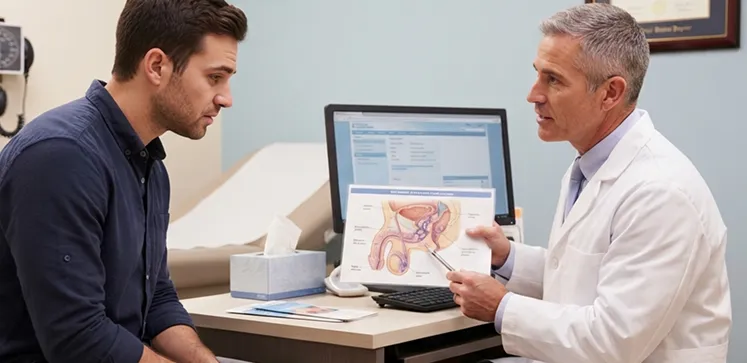
A varicocele is an enlargement of the veins inside the scrotum. It is similar to varicose veins that can develop in the legs.
Varicoceles are common and may not cause any noticeable symptoms.
In some men, however, a varicocele can cause scrotal discomfort, testicular changes, or problems with sperm production.
Understanding its symptoms, causes, diagnosis, and treatment options can help you know when medical evaluation is needed.
A varicocele develops when the veins that carry blood away from the testicle do not work properly. Blood can collect in these veins, causing them to become enlarged and more visible.
Varicoceles most often occur on the left side of the scrotum, although they can affect both sides. They commonly develop during puberty as the testicles grow and blood flow increases.
Many varicoceles are harmless and do not require treatment. However, a doctor may recommend monitoring or treatment if there is persistent pain, testicular growth problems, or evidence of impaired sperm production.
Some men have no symptoms at all. When symptoms occur, they may include:
Pain is not always directly related to the size of the varicocele.
A smaller varicocele can sometimes cause discomfort, while a larger one may cause no symptoms.
The exact reason some men develop varicoceles is not always clear. Normally, small valves inside the scrotal veins help blood move upward toward the heart.
If these valves do not work properly, blood can flow backward and collect around the testicle. The increased pressure can enlarge the veins and lead to a varicocele.
The anatomy of the veins on the left side may help explain why left-sided varicoceles are more common.
Learn more
Doctors commonly classify varicoceles into grades based on how easily they can be detected during a physical examination.
A Grade 1 varicocele is small and usually cannot be seen. A doctor may only feel it when the patient performs a Valsalva maneuver, which involves bearing down or straining.
A Grade 2 varicocele is larger than Grade 1 and can usually be felt during a physical examination without requiring significant straining. It may still not be clearly visible.
A Grade 3 varicocele is the largest clinical grade. The enlarged veins can generally be seen and felt through the scrotal skin.
A higher grade does not automatically mean that treatment is necessary. Doctors consider symptoms, testicular development, fertility, and other findings before recommending treatment.
A subclinical varicocele cannot be felt or seen during a routine physical examination. It may be detected during a scrotal ultrasound, often when the test is performed for another reason.
Diagnosis usually starts with a medical history and physical examination. The doctor may examine the scrotum while you are standing and lying down and may ask you to strain.
A scrotal ultrasound with Doppler imaging may be used when the physical examination is unclear or when the doctor needs more information. Ultrasound can show enlarged veins and abnormal blood flow.
For men concerned about fertility, a semen analysis may also be recommended. It can assess sperm count, movement, and shape. Depending on the situation, doctors may also perform hormone testing or other fertility investigations.
Varicocele is one of the conditions associated with male infertility. Not every man with a varicocele has fertility problems, but the condition can affect testicular function in some cases.
One possible explanation is that enlarged veins may interfere with the normal temperature regulation of the testicles. Changes in blood flow, oxidative stress, and local testicular conditions may also contribute to impaired sperm production.
A varicocele may be associated with:
If a man has a varicocele but normal fertility and no significant symptoms, treatment may not be necessary.
Treatment depends on the individual’s symptoms, fertility goals, testicular development, and test results.
Small or symptom-free varicoceles are often monitored rather than treated immediately. Regular examinations may be recommended, particularly for adolescents with concerns about testicular growth.
For mild discomfort, supportive underwear, activity adjustments, and appropriate pain-relief medicines may help.
Persistent or worsening pain should be evaluated by a healthcare professional rather than managed indefinitely at home.
When treatment is appropriate, varicocelectomy may be recommended. The procedure closes or ties off the affected veins so blood can be redirected through healthier veins.
Microsurgical varicocelectomy is one approach and uses magnification to help the surgeon identify and preserve important structures.
Varicocele embolization is a minimally invasive alternative to surgery.
An interventional radiologist places a catheter into a vein and uses materials such as coils or a sclerosing agent to block abnormal blood flow through the affected veins.
The most suitable treatment depends on the individual case and the expertise available.
Recovery varies depending on the procedure. Many men can return to light daily activities relatively quickly, but strenuous exercise and heavy lifting may need to be avoided for a period recommended by the treating doctor.
Mild swelling, bruising, or discomfort can occur during recovery. Follow-up appointments help the doctor check healing and assess whether the varicocele has resolved.
Men being treated for fertility problems may need a follow-up semen analysis several months after treatment because sperm production takes time.
Varicocele treatment can improve semen parameters in some men, and some couples may have a better chance of achieving pregnancy afterward. However, improvement is not guaranteed.
The outcome can depend on factors such as the man’s age, varicocele grade, testicular function, sperm quality, and the fertility status of his partner.
A doctor should assess the complete fertility picture rather than assuming that treating the varicocele alone will resolve infertility.
Like any medical procedure, varicocele treatment has potential risks. Depending on the technique, complications may include:
Your doctor should explain the potential benefits and risks of the recommended procedure before treatment.
Consider seeing a doctor if you notice a lump, enlarged veins, persistent scrotal pain, testicular size changes, or difficulty conceiving.
Medical evaluation is particularly important if scrotal pain develops suddenly or severely, because other conditions can cause acute testicular pain and may require urgent treatment.
If you are trying to conceive and have been diagnosed with a varicocele, a urologist or male fertility specialist clinic can assess whether it may be affecting sperm production.
A varicocele is an enlargement of the veins around the testicle and is often harmless. However, it can sometimes cause discomfort, affect testicular development, or contribute to abnormal sperm production.
Diagnosis may involve a physical examination, Doppler ultrasound, and semen analysis when fertility is a concern. Treatment is not necessary for every varicocele. When treatment is appropriate, options can include monitoring, symptom management, varicocelectomy, or varicocele embolization.
The right approach depends on your symptoms, fertility goals, test results, and overall reproductive health.