Fibroids are common non-cancerous growths that develop in or around the uterus. They are often found during routine checkups or when investigating symptoms like heavy periods, pelvic pain, or fertility issues.
Many women also visit a fibroid treatment clinic when these symptoms start affecting their daily life.
Many women ask, “What size fibroid is considered dangerous?”
There is no exact size that makes a fibroid dangerous. While larger fibroids are more likely to cause problems, even small fibroids can lead to serious symptoms depending on their location and how they affect the body.
There is no exact fibroid size that is automatically considered dangerous.
In general, fibroids larger than 5–10 cm are more likely to cause symptoms and complications, while those over 10 cm are considered very large and may need closer monitoring.
However, size is only one factor. A small fibroid causing heavy bleeding or fertility problems can be more concerning than a larger fibroid that causes no symptoms.
Bigger types of fibroid are not always more dangerous. Two people with the same-sized fibroid can have very different symptoms.
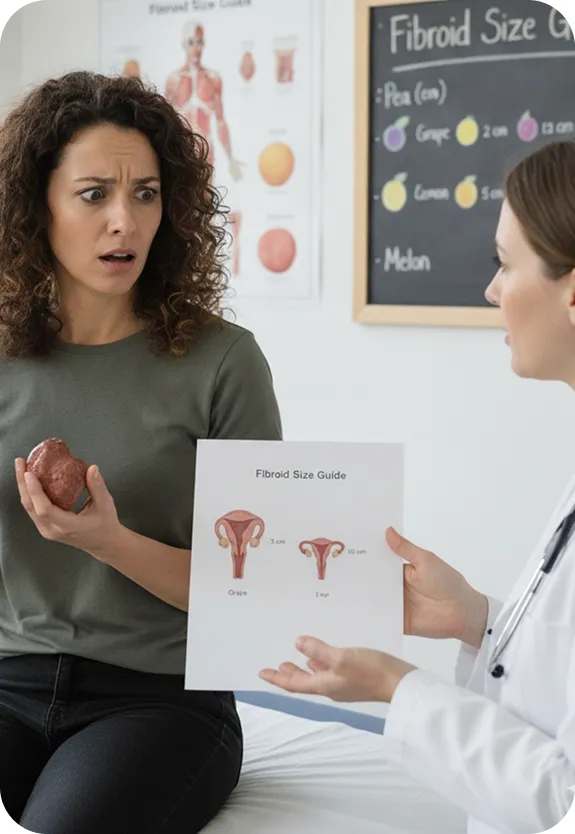
For example, a small fibroid inside the uterus may cause heavy bleeding, while a larger fibroid on the outside may cause little or no discomfort.
Also, fibroids that grow quickly or appear in groups can sometimes cause more problems than a single large one. That’s why doctors look at symptoms and location of fibroid, not just size.
A fertility specialist clinic don’t judge fibroid by size alone. They look at the full picture. Key factors include:
These factors often matter more than size when deciding if treatment is needed.
The following table gives a simple overview of fibroid size categories and their risk levels.
Fibroid Size | Approximate Measurement | Comparison | Risk / Danger Potential |
Small | Less than 2 cm | Pea or blueberry | Low risk, usually no symptoms |
Medium | 2–5 cm | Cherry to plum | Mild risk, possible symptoms |
Large | 5–10 cm | Lemon to grapefruit | Moderate to high risk, symptoms likely |
Very Large | More than 10 cm | Melon or larger | High risk, needs close monitoring |
Small fibroids are often found by accident during an ultrasound or routine scan. Most of the time, they do not cause any symptoms and do not need treatment.
In some cases, depending on where they are located, they may cause mild issues such as:
Generally, small fibroids are not dangerous and are simply monitored over time. However, if they grow inside the uterine cavity, they can sometimes lead to heavier bleeding, difficulty conceiving, or anemia.
This is why doctors focus more on location and symptoms rather than size alone.
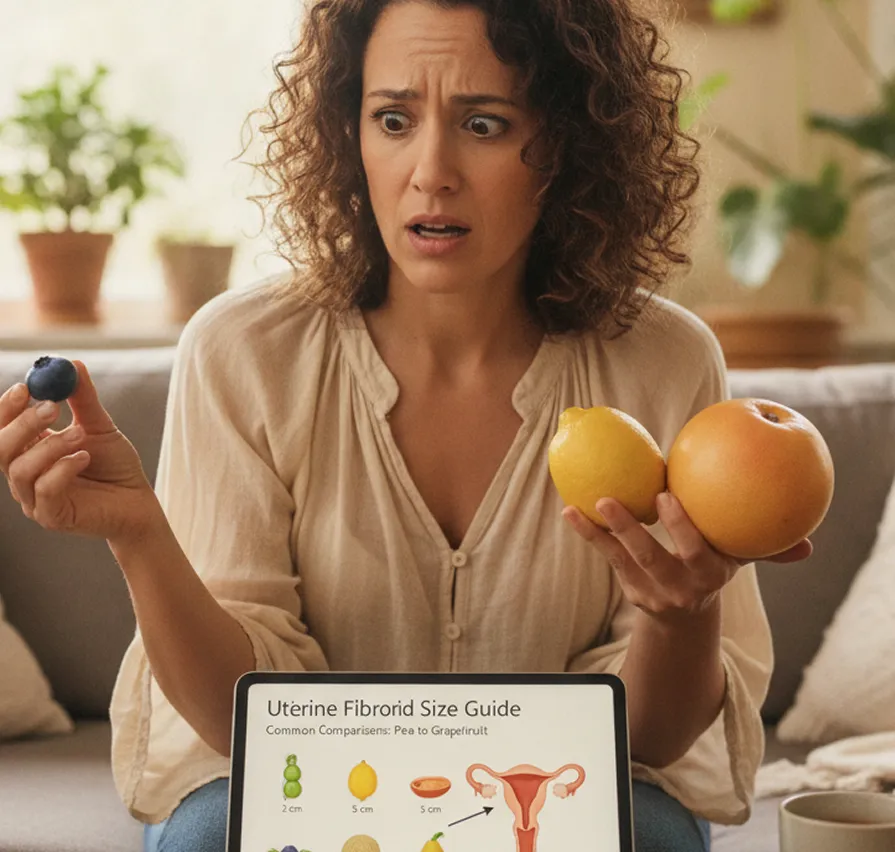
Medium-sized fibroids are more likely to cause noticeable symptoms, and many women first discover them when symptoms start to affect daily life.
Common signs may include:
These fibroids are not usually dangerous, but they can become a concern if they cause heavy bleeding, affect fertility, grow quickly, or start pressing on nearby organs.
In most cases, doctors simply monitor them over time with checkups and scans.
Large fibroids can change the shape of the uterus and often start to cause noticeable symptoms that affect reproductive and daily life.
Common symptoms include:
These fibroids are not always dangerous, but they can become a concern because they may press on nearby organs, cause heavy bleeding, lead to anemia, or affect pregnancy.
At this stage, many women discuss treatment options with their doctor.
Very large fibroids are those bigger than 10 cm and can sometimes grow quite large, even up to the size of a melon.
At this stage, symptoms are usually more obvious and harder to ignore. Common symptoms include:
These fibroids can be more concerning because they may press on organs, cause heavy bleeding, lead to anemia, and sometimes require treatment or surgery.
Even though most are not cancerous, very large fibroids should always be checked by a doctor.

A fibroid is not considered dangerous based only on its size.
Even small fibroids can cause serious problems in some cases.
You should be more concerned if a fibroid causes:
These symptoms matter more than size because they can affect your health and daily life.
In such cases, it is important to get medical advice early.
Small fibroids are not always harmless, and large fibroids are not always serious.
A small fibroid can cause more problems if it is located inside the uterus. It may lead to heavy bleeding, fertility issues, or miscarriage.
On the other hand, a large fibroid on the outer side of the uterus may cause little or no symptoms.
This is why doctors focus more on location, symptoms, and growth rather than size alone.
Fibroid treatment does not depend on size alone. Doctors also consider symptoms, location, age, and fertility plans before choosing a treatment.
Common treatment options include:
In general, smaller fibroids may only need monitoring, while larger or symptom-causing fibroids are more likely to need active treatment.
Early assessment can help identify problems before complications develop. You should schedule a medical evaluation if you experience:
Even if symptoms seem mild, discussing them with best fertility specialists can provider provide reassurance and appropriate guidance.
There is no single fibroid size that automatically makes it dangerous. Fibroids larger than 5–10 cm are more likely to cause symptoms, but size alone does not define risk.
Doctors focus on other important factors like location, growth speed, pain, bleeding, fertility issues, and pressure on nearby organs. A small fibroid can sometimes cause more problems than a larger one.
The most important factor is symptoms. If you have heavy bleeding, strong pain, or fertility problems, you should see a doctor, no matter the fibroid size.