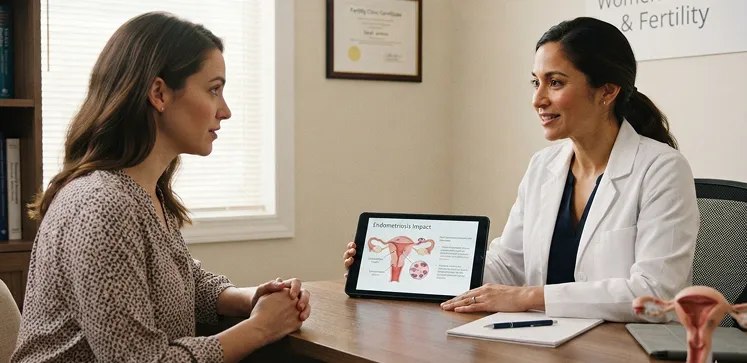
Endometriosis is a common gynaecological condition that can cause painful periods, pelvic pain, and discomfort during sex. For some women, it can also make getting pregnant more difficult.
However, having endometriosis does not mean you are infertile. Many women with the condition conceive naturally, while others may need fertility support.
Understanding how endometriosis can affect reproductive health can help you recognise symptoms early and make informed decisions about treatment and pregnancy planning.
Endometriosis is a condition where tissue similar to the lining of the uterus grows outside the uterus. It can affect areas such as the ovaries, fallopian tubes, and pelvic tissues.
This tissue responds to hormonal changes during the menstrual cycle, which can cause inflammation, irritation, scar tissue, and adhesions.
Symptoms can range from mild to severe, and some women may have endometriosis without experiencing major symptoms.
Endometriosis can sometimes make it harder to get pregnant. Inflammation, scar tissue, and changes around the ovaries or fallopian tubes may affect normal reproduction.
It may affect fertility in several ways:
However, many women with endometriosis still become pregnant naturally. The impact on fertility is different for every woman.
No. Having endometriosis does not mean you cannot have children. Many women conceive naturally, while others may need fertility support.
Your chances of pregnancy may depend on:
If pregnancy is taking longer than expected, a fertility specialist can help identify the cause and discuss suitable options such as IUI or IVF.
Learn more
Symptoms can provide important clues, particularly when they occur alongside difficulty conceiving.
Very painful periods, known as dysmenorrhoea, are a common symptom of endometriosis. Period pain that interferes with work, daily activities, sleep, or relationships should not simply be dismissed as normal.
Painful periods alone do not mean that fertility is affected. However, persistent or worsening menstrual pain may be a reason to speak with a gynaecologist about possible endometriosis.
Ongoing pelvic pain can be linked to inflammation, endometriosis lesions, or adhesions. Chronic pain may also affect emotional wellbeing, relationships, physical activity, and sexual health.
When fertility is a concern, identifying the underlying cause of pelvic pain can help doctors develop a more appropriate treatment plan.
Pain during or after sex, particularly deep pelvic pain, can occur with endometriosis.
This symptom may affect fertility indirectly if intercourse becomes uncomfortable or is avoided. It can also be an important sign that further gynaecological assessment is needed.
Heavy menstrual bleeding or changes in your usual menstrual pattern may occur with several gynaecological conditions. They are not specific to endometriosis.
If heavy or irregular periods occur together with pelvic pain, painful sex, or difficulty conceiving, discussing the symptoms with a healthcare professional can help determine whether further investigation is appropriate.
Difficulty getting pregnant may sometimes be one of the first reasons endometriosis is discovered.
If you have been trying to conceive without success, particularly if you also have symptoms associated with endometriosis, a fertility assessment can help identify possible contributing factors.
If fertility is a concern, your doctor will ask about your periods, symptoms, medical history, and pregnancy plans.
A pelvic exam or transvaginal ultrasound may also be recommended. Common parts of the assessment include:
A normal scan does not always rule out endometriosis. Your doctor may recommend further tests or a specialist review based on your symptoms.
Treatment can help manage endometriosis symptoms and may support fertility in some women.
The right treatment depends on your symptoms, disease, and whether you are trying to get pregnant.
Treatment may include:
Some hormonal treatments prevent pregnancy while you are taking them, so your treatment plan should match your fertility goals.
Having endometriosis does not mean you cannot get pregnant. Some women conceive naturally, while others may need fertility support.
Your doctor may recommend:
The best approach depends on your age, fertility health, endometriosis, and other factors.
Age is an important part of fertility planning. Fertility generally decreases with age because egg number and quality decline over time.
If you have endometriosis, it may be helpful to discuss fertility earlier, especially if you have:
Talking to a specialist early does not mean you need treatment right away. It simply helps you understand your options.
Many women with endometriosis have healthy pregnancies. However, the condition may be linked with a higher risk of some pregnancy complications.
During pregnancy, tell your doctor or maternity team that you have endometriosis. They can consider your medical history and provide appropriate care throughout your pregnancy.
Most importantly, an endometriosis diagnosis does not mean you should expect problems during pregnancy. Every woman’s experience is different.
Consider speaking with a fertility-specialised clinic if you have endometriosis and:
Early advice can help you understand your fertility status and make decisions based on your personal circumstances.
Endometriosis and fertility can be closely connected, but an endometriosis diagnosis does not mean that having a baby is out of reach.
Many factors influence fertility, and your experience may be very different from another woman’s.
If you have symptoms of endometriosis or are struggling to conceive, getting the right assessment can provide clarity.
A gynaecologist or fertility specialist can help you understand how the condition may be affecting your reproductive health and discuss the options available to you.