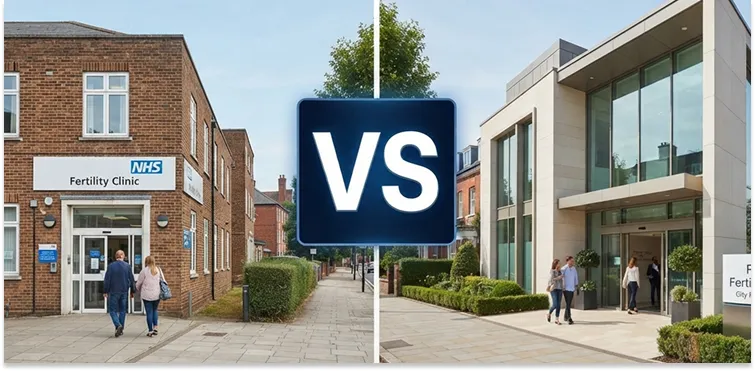
Choosing between NHS and private fertility treatment in London is an important decision for anyone planning to start or grow their family.
While both aim to help people achieve pregnancy, they differ in areas such as eligibility, waiting times, treatment options, costs, and patient care.
The right choice depends on your individual fertility needs, medical history, budget, and how quickly you want to begin treatment. Each option offers its own advantages depending on your circumstances.
This guide compares NHS vs private fertility treatment in London to help you understand the key differences and make a more informed decision about your fertility journey.
Both NHS and private fertility treatment provide high-quality care, but they differ in several important areas.
Comparing these differences can help you understand what to expect from each option and choose the fertility pathway that best meets your needs and family-building goals.
Factor | NHS Fertility Treatment | Private Fertility Treatment |
Eligibility | Strict eligibility criteria | Available to most eligible patients without NHS restrictions |
Waiting Times | Often includes waiting lists | Usually faster appointments and treatment |
Treatment Costs | Funded if eligible | Self-funded or covered by some insurance plans |
Treatment Options | Limited by local NHS policies | Wider range of fertility treatments and services |
Choice of Clinic | Limited NHS-approved providers | Freedom to choose your preferred fertility clinic and consultant |
Advanced Technology | May have limited access | Greater access to the latest fertility technologies |
Personalised Care | Standardised treatment pathways | Highly personalised treatment plans |
Appointment Flexibility | Limited appointment availability | Flexible scheduling with shorter waiting times |
Support Services | Basic counselling and support | Comprehensive fertility support and patient care |
Eligibility is often the first major difference between NHS and private fertility treatment.
NHS fertility treatment is only available to patients who meet specific eligibility criteria, which may vary between Integrated Care Boards (ICBs) across London.
Eligibility is often based on factors such as age, BMI, smoking status, medical history, previous fertility treatment, and how long you’ve been trying to conceive.
Private fertility clinics usually have fewer eligibility restrictions, allowing more people to access treatment without NHS funding requirements.
This gives patients greater flexibility and the opportunity to start treatment sooner if it is medically appropriate.
Starting treatment quickly can be important, particularly because fertility naturally declines with age.
NHS fertility treatment often involves several stages before treatment begins.
Patients may wait for:
Depending on demand, the entire process may take several months.
Private fertility clinics typically offer much shorter waiting times.
Many patients can arrange an initial consultation within days, complete fertility testing quickly, and begin treatment much sooner if appropriate.
This faster access is one of the main reasons many patients choose private fertility care.
Cost is one of the biggest considerations when comparing NHS and private fertility treatment.
If you meet NHS funding criteria, some fertility treatments may be fully or partially funded.
Depending on local policies, this may include:
However, funding levels vary across London.
Private treatment requires patients to pay for consultations, investigations, medications, and procedures.
While costs are higher, patients benefit from:
Many clinics also provide payment plans to help spread treatment costs.
The number of available treatment options differs significantly.
NHS clinics usually provide treatments that are considered medically necessary based on national guidance and local funding policies.
Available treatments may include:
Not every treatment is routinely funded.
Private fertility clinics often offer a much broader range of services, including:
This wider choice allows treatment to be tailored more closely to individual needs.
The level of choice you have can vary depending on whether you choose NHS or private fertility treatment. This can influence your overall treatment experience.
NHS patients are usually referred to a fertility clinic within their local area. The available clinics and consultants depend on local NHS services.
As a result, your choice of fertility specialist or clinic may be limited compared to private care.
Private fertility treatment gives you the freedom to choose the clinic and consultant that best meet your needs. Choosing a private fertility treatment clinic in London also allows you to select a specialist based on their experience and areas of expertise.
Many private clinics offer continuity of care, allowing you to see the same consultant throughout your fertility journey. This helps build trust and provides a more consistent and personalised treatment experience.
Advancements in fertility technology continue to improve treatment options and outcomes. However, access to these technologies can differ between NHS and private fertility care.
NHS clinics may offer some advanced fertility treatments when they are considered medically necessary and available through local funding.
However, access can vary depending on NHS policies, clinic resources, and individual eligibility criteria.
Private fertility clinics often provide access to a wider range of advanced fertility technologies and laboratory techniques. Treatment options are usually based on your specific fertility needs rather than funding availability.
Depending on your circumstances, this may include advanced embryo monitoring, genetic embryo testing, time-lapse imaging, advanced sperm selection, and modern embryo freezing methods.
Every fertility journey is unique, and treatment success can depend on many individual factors. The level of personalised support you receive may differ between NHS and private fertility care.
NHS fertility clinics provide high-quality treatment based on national guidelines and medical evidence. Patients receive care from experienced fertility professionals throughout their treatment.
However, due to high demand and limited resources, treatment pathways are often more structured and less personalised.
Private fertility clinics usually focus on creating personalised treatment plans based on each patient’s fertility needs and goals.
Your care may consider factors such as age, fertility history, hormone levels, ovarian reserve, sperm health, and previous treatment outcomes to provide a more tailored experience.
Managing fertility treatment alongside work and daily responsibilities can be challenging. Appointment availability and scheduling flexibility can make a big difference to the overall treatment experience.
NHS fertility appointments depend on clinic capacity and patient demand. In some cases, patients may experience longer gaps between consultations, tests, and treatment stages.
Appointment times and rescheduling options may also be more limited due to NHS service availability.
Private fertility clinics usually offer greater flexibility with appointment scheduling and quicker access to consultations and investigations.
Patients often benefit from shorter waiting times, easier communication, and better continuity of care, helping make the treatment journey more convenient.
Fertility treatment often involves much more than medical procedures alone.
NHS care usually includes essential investigations and medications that are clinically required within funded treatment pathways.
Additional services may vary depending on local resources.
Private clinics often provide more comprehensive fertility support, including:
Patients may also benefit from coordinated care throughout their treatment.
The overall experience can have a significant impact on a patient’s fertility journey.
NHS fertility services provide safe, evidence-based treatment delivered by experienced healthcare professionals.
However, busy clinics and limited resources may result in less personalised care and longer waiting periods.
Private fertility clinics often focus on delivering a more supportive and patient-centred experience.
Many offer:
This personalised approach can make patients feel more informed, reassured, and supported at every stage.
Many people choose private fertility treatment because they want greater flexibility, quicker access, and a wider range of treatment options than may be available through NHS-funded care.
Common reasons include:
For patients who do not qualify for NHS funding or wish to avoid lengthy waiting times, private fertility treatment can offer a more convenient and tailored route to parenthood.
Learn more
Both NHS and private fertility treatment in London provide high-quality fertility care, but they serve different needs. NHS treatment can be an excellent option for eligible patients seeking funded care, although access may depend on local eligibility rules and waiting times.
Private fertility treatment offers greater flexibility, faster access, a wider range of fertility services, and more personalised care. For many individuals and couples, these advantages provide greater confidence and control throughout their fertility journey.
By comparing eligibility, costs, waiting times, treatment options, specialist access, and patient support, you can choose the fertility pathway that best aligns with your medical needs, personal preferences, and family-building goals.